These are short answers to the questions Canadians most often ask about weeping tile: what it is and whether a house needs it, how it connects to a sump, why it clogs, how it is inspected and cleaned, what disconnection from the sewer involves, how interior and exterior systems compare, and what the work costs as CAD 2026 planning estimates. Each answer links to a guide.
- Weeping tile keeps water from standing at the footing; it does not waterproof the wall.
- Check the pump and the discharge outlet before blaming the tile.
- City programs and permits change; the answers note when figures were checked.
01 /About these answers
Each answer is written to stand on its own, and most link to a longer guide. Rules and subsidy figures come from city, utility and code pages read in September 2026; costs are this site’s CAD 2026 planning ranges, which vary by city, access, depth and contractor and are not quotes. For the full list of ranges see the cost page; for city programs see Across Canada.
If you are trying to work out why water is appearing, the Weeping Tile Problem Finder ranks the likely causes from what you have seen. If you already know the drain needs work, the Interior vs Exterior Weeping Tile tool compares the two main routes. Terms are defined in the glossary.
FAQAll questions
What is weeping tile used for?
To drain water away from the bottom of a basement. It collects groundwater and soaked-in rain at the footing and carries it to a sump or approved outlet before it can press against the wall and floor. See what weeping tile is.
What does weeping tile look like?
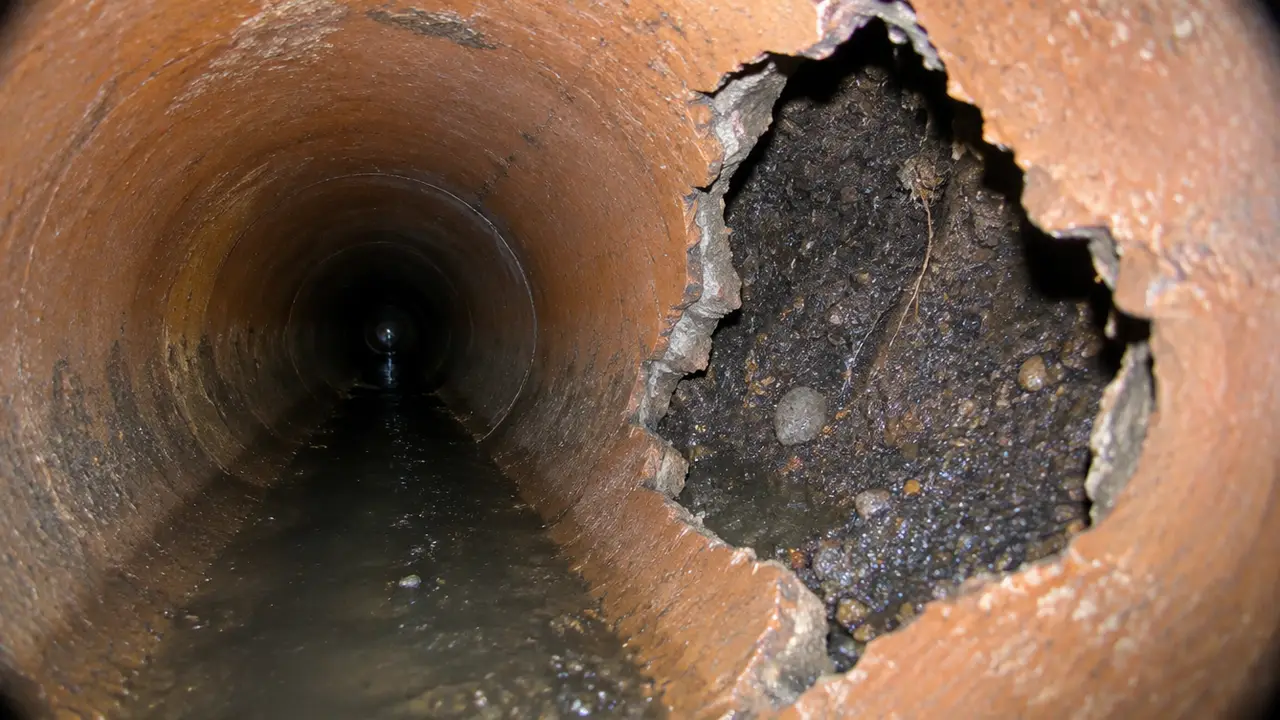
In newer houses, black corrugated plastic pipe or white rigid pipe with holes, often wrapped in a fabric sock and surrounded by crushed stone. In older houses, short reddish clay tiles laid end to end.
Is weeping tile mandatory in Alberta?
For new houses, the National Building Code – 2023 Alberta Edition, in force since May 1, 2024, carries the Part 9 requirement to drain the bottom of exterior foundation walls unless shown to be unnecessary. Confirm details with your permit office.
Do the holes in perforated drain pipe face up or down?
Down, at roughly four and eight o’clock, for rigid pipe with two rows of holes. Water rises into the pipe and runs along its solid bottom. Follow any markings on the pipe.
Is a sock on weeping tile necessary?
In silt and fine sand, a filter is important; in heavy clay it matters less than clean stone. Iron-rich groundwater can clog socks, so match the filter to the soil.
Can clogged weeping tile be cleaned out?
Often, if the pipe is intact. A camera run first, then jetting from the sump or a cleanout clears silt, fresh ochre and cut roots. Crushed sections need digging.
What causes orange slime in weeping tile?
Iron ochre: bacteria turning dissolved iron in groundwater into a sticky deposit. It clogs slots, socks, pumps and discharge lines and is easiest to remove while fresh.
How do I know if my weeping tile has failed?
Water at the wall–floor joint on several walls after rain, a pit that stays dry while the floor gets wet, and silt or orange slime in the pit are the usual signs. A camera run confirms it.
Will a sump pump work if there is no weeping tile?
Yes, but only for water that reaches the pit directly. Calgary’s guide notes pumps may be installed with or without tile; without it, water at the far walls is not collected.
Can weeping tile drain without a pump?
Yes, by gravity to a storm or foundation service, a ditch or a dry well where the site allows. Part 9 calls for an automatic pump where gravity drainage is not practical.
How far from the house should sump water discharge?
Clear of the foundation backfill. Toronto asks for at least 2 m from the foundation wall onto permeable ground; Calgary asks for outlets at least 2 m from public sidewalks, streets and lanes.
How often should a sump pump be replaced?
Around every 10 years. Calgary suggests replacing it every 10 years or sooner; Edmonton expects a good pump to last around 10 years.
Why was my weeping tile connected to the sewer?
That was common practice in older houses. Edmonton’s guide says pre-1988 development directed weeping tile to the sanitary and combined sewers; since then cities have moved it to sumps or storm services.
What is weeping tile disconnection?
Cutting the tile off the house drain, capping the drain, and routing the tile to a sump that pumps to the surface. Toronto calls the first part severance and capping.
How much does Toronto pay toward weeping tile disconnection?
Up to 80% of invoiced cost, to a maximum of $400, for foundation drain severance and capping, plus separate maximums for sumps and backwater valves, as checked September 2026.
Does a backwater valve protect a house whose tile drains to the sewer?
Not fully. If the tile drains into the building drain upstream of the valve, tile water has nowhere to go while the valve is closed and can surface at the floor drain. Disconnection fixes that.
What is the flapper valve on my weeping tile for?
On tile that drains into a sewer, a backflow flapper, often with a P-trap, keeps wastewater and sewer gas out of the tile. EPCOR advises cleaning these valves periodically.
Is interior or exterior weeping tile better?
Exterior keeps water out of the wall and suits single walls and finished basements; interior costs less per metre and suits whole perimeters and walls built over outside. The comparison tool scores both.
Can weeping tile be installed under an existing basement floor?
Yes. An interior system cuts a strip of slab along the wall, lays the drain beside the footing in stone, and patches the floor, with a sump to pump the water out.
How much does weeping tile replacement cost per metre?
As CAD 2026 planning ranges, about $150 to $300 per metre inside plus a sump, or $250 to $500 per metre outside with a membrane, before obstacles and finishes.
How much does a weeping tile camera inspection cost?
About $250 to $450 as a CAD 2026 planning range, or $400 to $1,200 combined with jetting from the sump.
Is weeping tile repair covered by home insurance?
Repairing the drain is usually treated as maintenance. Water damage may be covered depending on the cause and whether you bought optional sewer backup, overland or seepage coverage. Ask your insurer.
Should downspouts be connected to weeping tile?
No. Roof water belongs on the surface, directed away from the house. Calgary suggests extending downspouts 1.2 to 1.8 m so runoff does not recirculate into the tile.
Who installs weeping tile?
Foundation waterproofing contractors and drain or plumbing contractors, depending on the job and the province. Sumps and backwater valves usually need a plumbing or building permit.