There is no single lifespan for weeping tile. A plastic pipe in clean stone with a filter and a working outlet can serve for decades; clay tile with open joints in silty soil near trees can fail much sooner. What usually fails first is not the pipe but the things around it: the filter, the stone, the pump, which Calgary and Edmonton expect to replace around every 10 years, and the discharge.
- Service life depends on the stone, filter, soil, roots and outlet as much as on the pipe material.
- The sump pump is the part with a known replacement cycle: about 10 years in Calgary and Edmonton guidance.
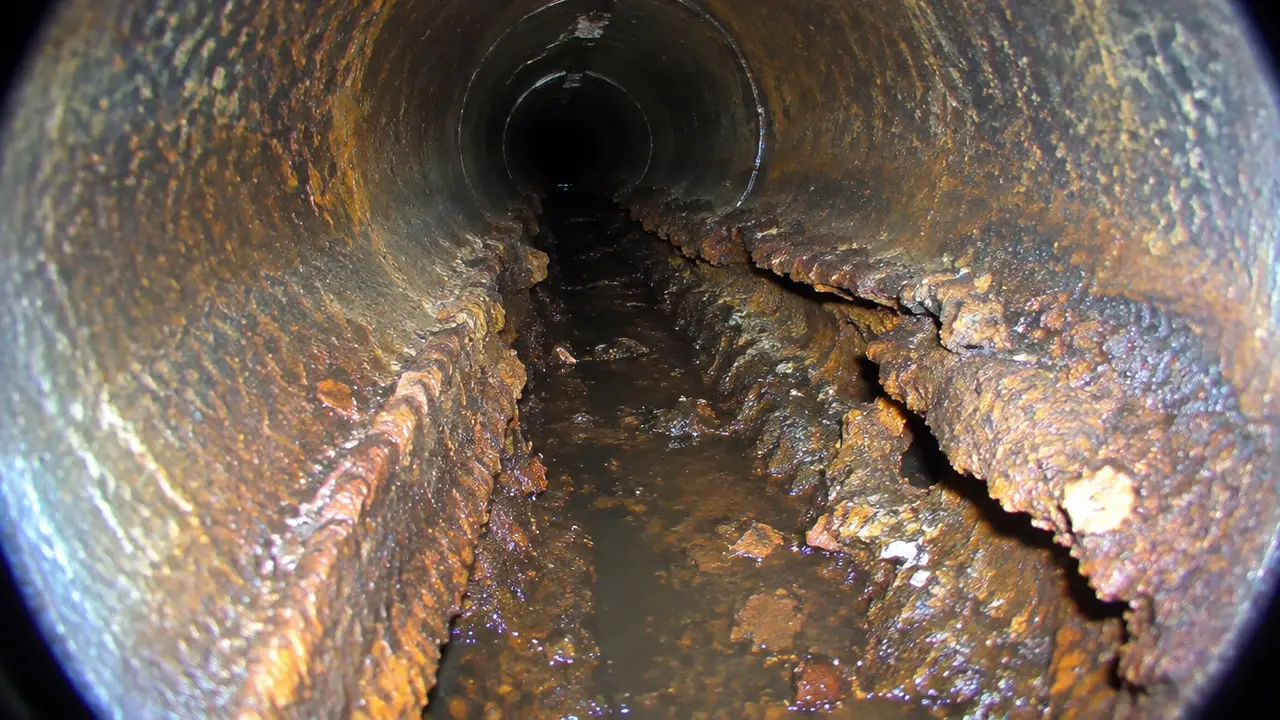
- Water returning at the joint after years of dry seasons is the typical sign of an ageing system.
- Home insurance treats sewer backup, overland water and groundwater seepage as separate, often optional, coverages.
01 /What decides how long weeping tile lasts?
Five things, and the pipe material is only one of them. Published lifespans for foundation drains are rarely based on measured data, so treat any single number with caution and look instead at what your system is made of and what it sits in.
| Factor | Helps it last | Shortens its life |
|---|---|---|
| Pipe | Continuous plastic with few joints, on a firm bed | Clay or concrete tile with open joints that drift apart |
| Stone and filter | Clean washed stone and a filter matched to the soil | Dirty fill, no filter, torn fabric |
| Soil and water | Coarse, free-draining ground; low dissolved iron | Fine sand and silt that migrate; iron-rich groundwater that feeds ochre |
| Surroundings | No large trees close to the wall; no traffic over the tile | Tree roots near joints; machines driven over shallow tile |
| Outlet | A sized pump with a backup, a clear discharge well away from the wall | An old pump, a frozen or buried hose, discharge soaking back to the tile |
02 /How long does a sump pump last compared with the tile?
Much less, and that is the part to plan for. The City of Calgary’s climate-ready guidance says to replace the pump every 10 years or sooner, and Edmonton’s homeowner guide expects a good-quality pump to last around 10 years, depending on how often it runs and how acidic and dirty the water is. Edmonton’s guide also points out that the majority of homes built there since 1988 have a sump pump, which means a large number of pumps reaching that age at once.
A tile loop in good ground can outlast several pumps. When an older basement starts leaking after years of being dry, test the pump and check the discharge before assuming the tile has failed; the Weeping Tile Problem Finder ranks the possibilities from what you have noticed.
03 /What are the signs that old weeping tile is failing?
- A basement that was dry for years now gets water at the wall–floor joint in heavy rain or melt, on more than one wall.
- The sump pit fills more slowly than it used to in the same weather, or stays dry while the floor gets wet.
- Silt, sand or orange slime keeps appearing in the pit.
- Efflorescence, the white powdery deposit, spreading low on the walls, showing water sitting against the concrete.
- A damp band along the bottom of the walls that never quite dries out.
- Water in a floor drain after rain when nobody is using water, which points to tile draining into the house drain.
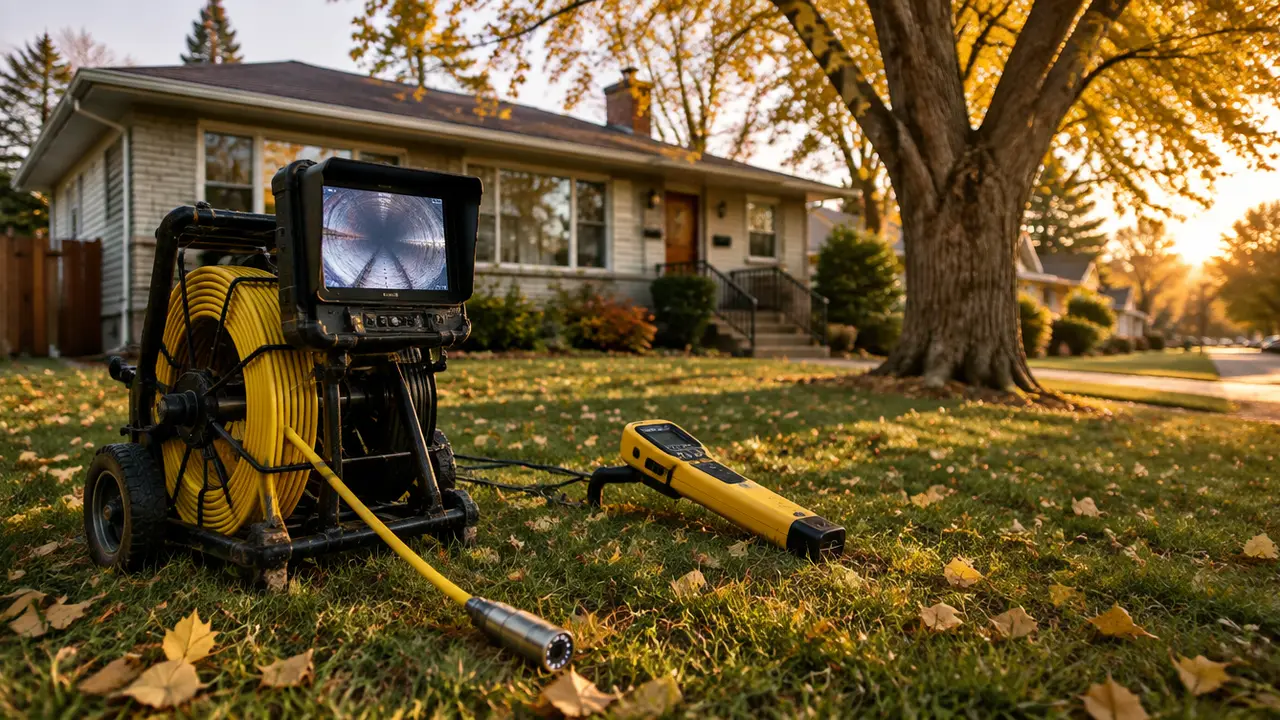
None of these is proof on its own. A camera inspection from the pit or a cleanout turns suspicion into a finding, with distances; see weeping tile camera inspection and flushing. For specific blockages, clogged weeping tile explains silt, ochre and roots.
04 /When did weeping tile become standard?
It depends on the city and the decade, and national code history is not the whole story because provinces and cities adopt editions at different times. What is clear is where things stand now: Part 9 of the National Building Code calls for the bottom of every exterior foundation wall to be drained unless that can be shown to be unnecessary, and Alberta has enforced the National Building Code – 2023 Alberta Edition since May 1, 2024.
Municipal records tell the local story better. Edmonton’s guide, for instance, describes pre-1960 houses on combined sewers, weeping tile draining to the sanitary side through 1988, and sump-based systems after that. For your own house, the permit office may have the original drawings, and a camera run shows what was actually built. The history of connections is in weeping tile connected to the sanitary sewer.
05 /Is weeping tile covered by home insurance?
Usually the tile itself is not; the water damage it lets in may or may not be, depending on how the water arrived and what you bought. The Insurance Bureau of Canada explains that basement damage from a sewer backup is covered only if you purchased optional sewer backup coverage; that flood or overland coverage is optional; and that groundwater and seepage coverage are not standard on all policies, with some insurers offering them as optional endorsements.
- Repairing or replacing the drain is generally treated as maintenance. Ask your insurer before assuming otherwise.
- Water that came up the floor drain from the city sewer falls under sewer backup coverage, if you have it.
- Water that seeped through the wall or floor from saturated ground is groundwater or seepage, which many policies exclude unless you added it.
- Water from surface flooding is overland coverage, which is optional.
- A failed sump pump may be treated differently again; read your policy’s wording on sump and seepage.
Keep records of maintenance, pump replacements and camera runs. Insurers ask about protective devices, and cities that subsidise them ask for invoices and permits. The Across Canada page lists programs as checked this month.
06 /What should you ask about weeping tile when buying a house?
- Is there a sump pit, how old is the pump, and is there a backup or alarm?
- Where does the weeping tile drain: a sump, a storm connection, or the house drain?
- Has the basement ever taken water, where, and what was done about it?
- Is there a camera report on the tile, or on the sewer line, from any past work?
- Where does the sump discharge on the lot, and does it freeze in winter?
- Are there cleanouts, a backwater valve, or a tile flapper, and where?
- Were any city subsidies or permits used for past drainage work?
A home inspector will check the visible parts. A camera run of the tile from the pit is a separate, inexpensive service that can be booked during a conditional period.
07 /How do you make weeping tile last longer?
| When | Task |
|---|---|
| Early spring | Pour-test the pump; test the backup and alarm; clear the discharge outlet of ice and snow |
| Spring | Check that downspouts discharge well away from the wall and that the ground still slopes away |
| After heavy storms | Look in the pit for silt or orange slime; note how fast it fills |
| Summer | Keep new trees and large shrubs well back from the foundation; keep heavy machines off the tile zone |
| Fall | Clean the pit; check the check valve; plan winter discharge so the line cannot freeze |
| Every few years | Camera run from the pit if the pit shows silt or ochre, or if the pump’s behaviour changes |
| Around year 10 | Replace the pump before it fails |
An ageing system rarely has to be replaced all at once. A loop that is sound on three walls and broken on the fourth can often be repaired on that side, or supplemented there with a short interior drain to the same pit. A clay system that is silting but intact can be flushed and watched. What changes the answer is a camera run that shows the same problem everywhere: joints opening all round, roots at every corner, no stone left around the pipe. That is the point where patching costs more over the years than starting again.
When the time comes to repair or replace, the cost page lists CAD 2026 planning ranges and the Interior vs Exterior Weeping Tile tool compares the two main routes.
FAQQuestions people ask
What is the typical lifespan of weeping tile?
There is no reliable single figure. Plastic tile in clean, filtered stone can last decades; clay tile with open joints in silty soil near trees often fails much sooner.
Does weeping tile wear out or just clog?
Mostly it clogs, separates or gets crushed. The pipe itself rarely wears out; the filter, stone, pump and outlet are the usual weak points.
Does home insurance pay to replace weeping tile?
Usually not; drain repair is generally treated as maintenance. Water damage may be covered depending on the cause and on optional coverages such as sewer backup or seepage. Ask your insurer.
Should I get a weeping tile camera inspection before buying a house?
It is worth considering on older houses, or where the basement shows signs of past water. It can often be booked alongside a sewer scope.
NETWORKGo deeper across the HAUSE Sewer network
Hydro jetting weeping tile: how foundation drains are cleaned, and when they cannot be
Hydro jetting weeping tile explained: how foundation drains clog with silt, roots and iron ochre, how they are jetted from the sump, and when to replace them.
SewerCleaners.caSewer backup insurance in Canada: coverage, deductibles, condos and claims
Sewer backup insurance in Canada explained: what the endorsement covers, deductibles and limits, flood vs backup, condos, septic, and whether it is worth it.
SewerQuotes.comSewer line insurance: what service line coverage costs and pays for
Sewer line insurance in Canada: how service line coverage differs from sewer backup, what it covers and costs, its limits, and when it is worth buying.