Weeping tile, diagnosed and fixed.
How the drain at your basement footing works, why it clogs, collapses or backs up, where its water should go, and how to choose between flushing, a spot repair, and a new system inside or out.
Weeping tile repair is the work that gets a basement’s foundation drain collecting and discharging water again. Depending on what a camera shows, it means flushing silt or iron ochre from an intact pipe, digging up one crushed section, fixing the sump pump or its discharge, disconnecting tile from the sanitary sewer, or replacing the system from outside or under the basement floor.
Put a basement through a 12-hour storm and watch where the water goes
One basement wall in section, from the lawn to the sanitary main. Pick the storm, the grading, the state of the weeping tile, where it drains, the pump and the discharge, then play the storm hour by hour.
What the model shows, in words
The footing is where water collects
Rain and snowmelt soak down the looser backfill beside the wall and gather at the lowest point, the footing. The blue band in the model is that water, measured against the underside of the basement slab. While the tile takes it in as fast as it arrives, the band stays low; once it climbs past the slab, water shows at the wall–floor joint. That is why the code wording puts the tile beside the footing with its top below the slab, as explained in depth, slope and layout.
A clogged tile slows the intake
Silt, iron ochre, roots and a crushed section each cut how much water the tile can accept, and a missing tile accepts none. In the lab they are simple intake limits, not measured rates. Pick "Silted" or "Iron ochre" in a heavy storm and the water at the footing rises past the slab even with a perfect pump, because the water never reaches the pit. That pattern, a wet floor beside a dry pit, is covered in clogged weeping tile.
The outlet decides the ending
With a sump, the pit fills from the tile and the float starts the pump. A failed pump, a power cut without a backup, or a discharge frozen shut leaves the pit to overflow. Put the discharge right beside the wall and half of what the pump lifts soaks back to the tile, so it runs longer for the same storm. Calgary asks that sump water clear the foundation backfill, and Toronto asks for two metres from the wall.
Sewer tie-ins fail in the biggest storms
Switch the tile to "Tied to the sanitary drain" and the heavy storm pushes the sewer main past full: water backs up the floor drain and into the tile. Add a backwater valve and it closes on cue, but the tile still empties into the same pipe above the valve, so its own water surfaces at the floor drain. The fix, disconnecting the tile and adding a sump, is in weeping tile connected to the sanitary sewer.
Surface water sets the load
A flat grade and a downspout dumping at the wall send roughly twice as much water down the backfill in this model as ground that falls away with the downspout extended. It is the cheapest variable in the whole system. The quantities are illustrative units chosen to show mechanisms, not flows for a real house; to rank the causes in your own basement, use the Weeping Tile Problem Finder.
What is your weeping tile doing?
Pick the closest match. Each path goes to the guide that answers it in full.
Weeping Tile Problem Finder
The Problem Finder scores thirteen possible causes of basement water, from a clogged or broken weeping tile to a failed pump, a frozen discharge, a sewer tie-in, surface water or an inside leak. Each answer adds published points to one or more causes. It shows the top three with a confidence band and the next test to confirm each one. It does not price anything.
How the Weeping Tile Problem Finder works →
Also freeInterior vs Exterior Weeping Tile
Compare interior and exterior weeping tile for your basement: problem, finish, access, wall and priorities scored openly, priced from the cost page.
Weeping Tile Problem Finder
Read these first
How weeping tile works
The drain, the stone, the filter and the outlet, and why each one matters.
CornerstoneCamera and flushing
Where the camera goes in, what the video shows, and how a jetter clears an intact pipe.
CornerstoneInterior or exterior
Two ways to give a basement a new drain, and how to choose between them.
CornerstoneCity rules and subsidies
Toronto, London, Ottawa, Edmonton, Winnipeg and Calgary, as checked this month.
What it looks like down there
Illustrations of what this work involves and what a camera or a trained eye picks up. Every guide on WeepingTileRepair.ca carries more like these.
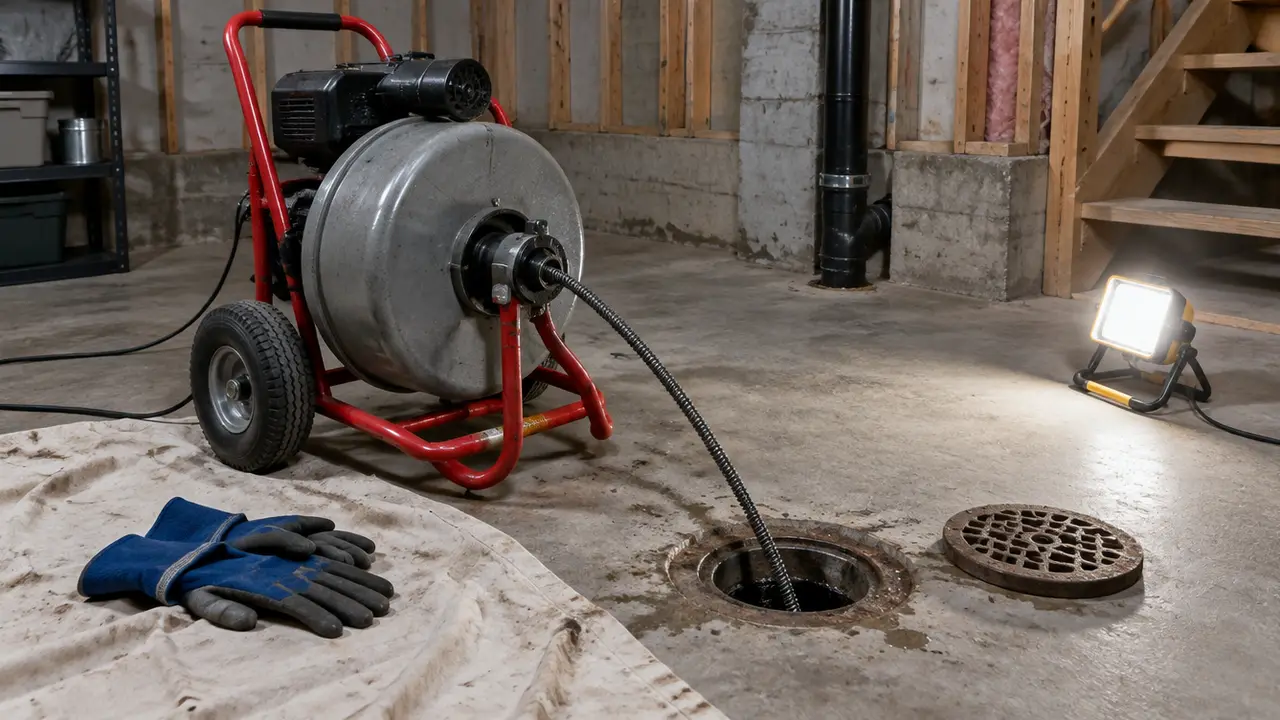
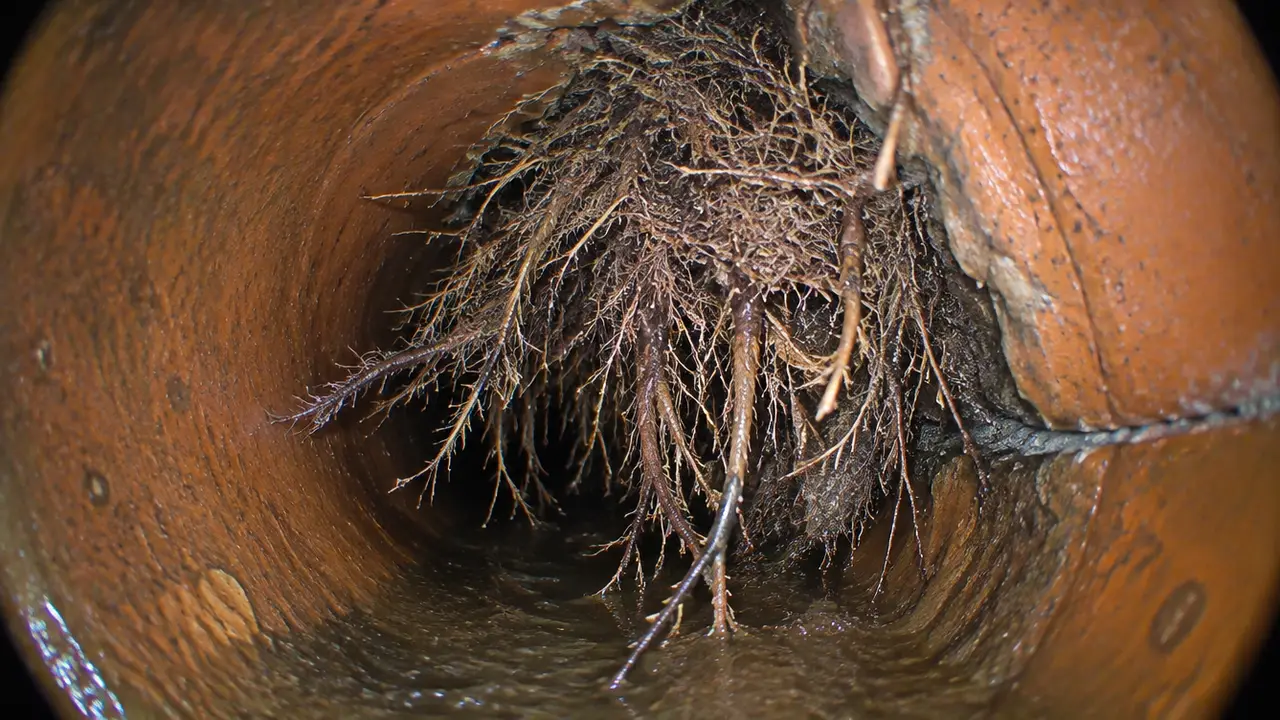
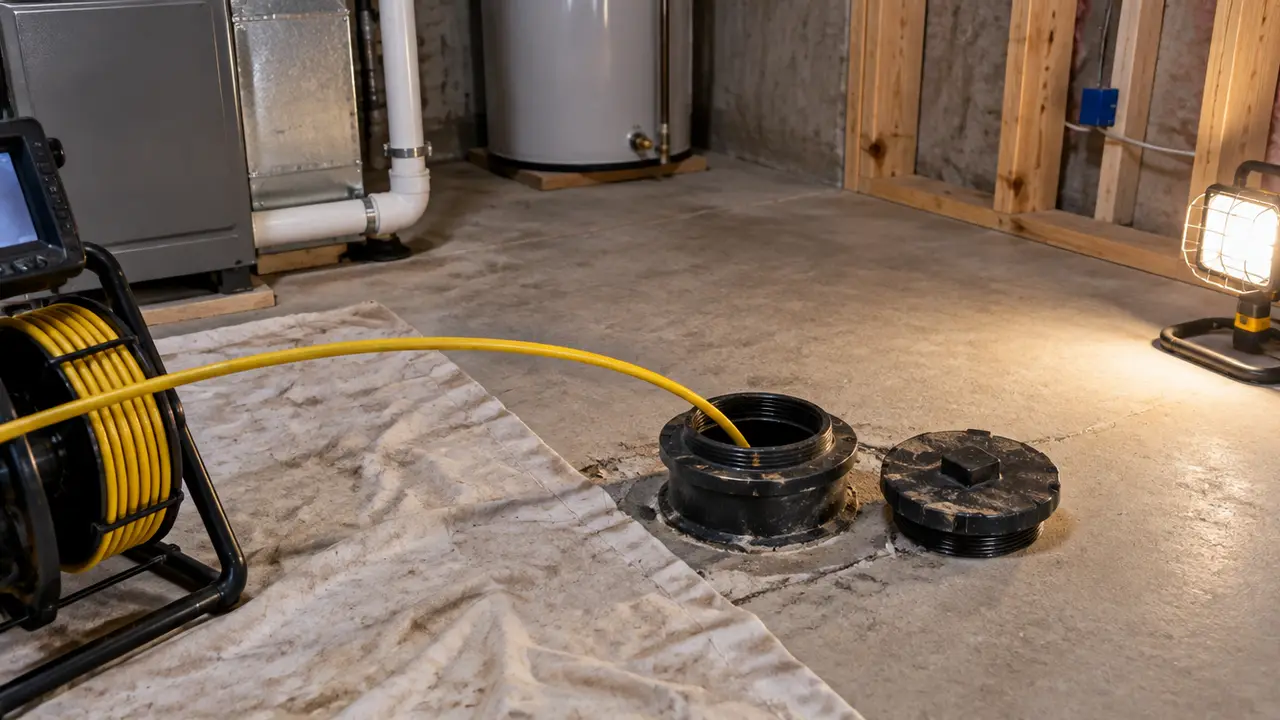
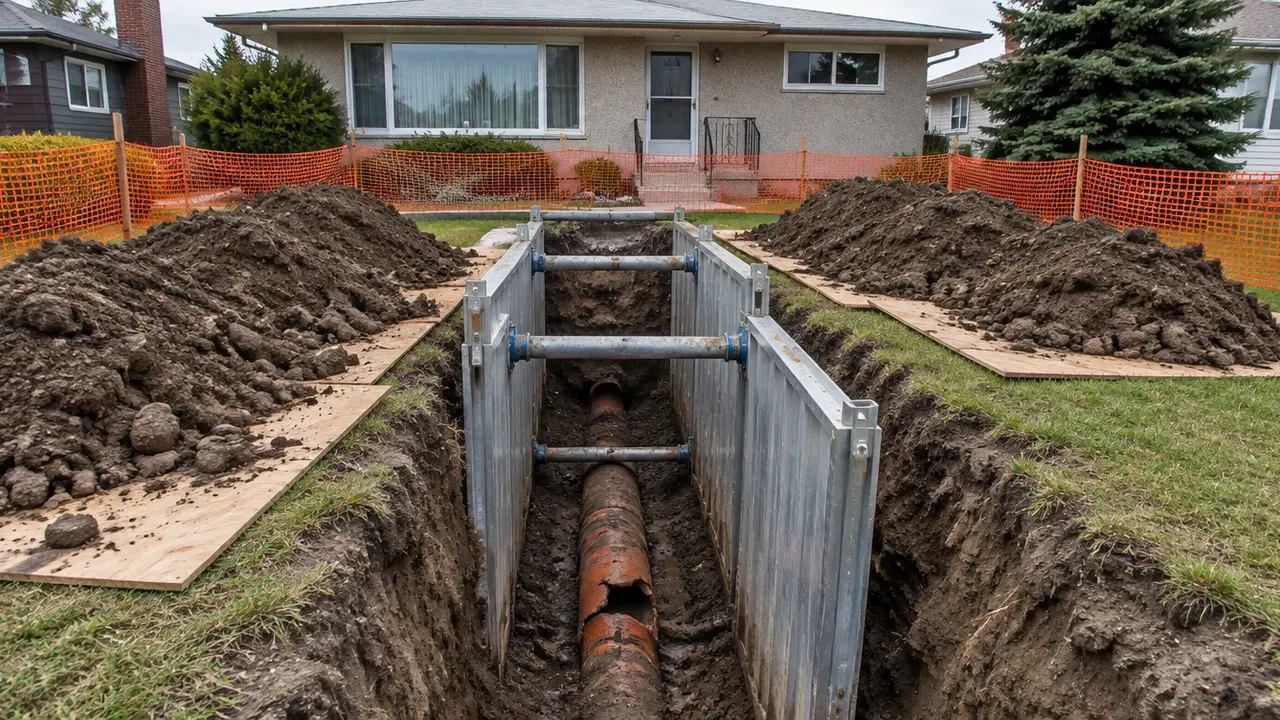
01 /What is weeping tile, and why does it fail?
Weeping tile is the perforated drain laid in clean stone beside a basement footing. Water that soaks down beside the wall reaches it before it can stand against the concrete or rise under the floor, flows in through slots or open joints, and runs to a sump pit or another outlet. Older Canadian houses usually have short clay tiles with open joints; newer ones have corrugated or rigid plastic pipe, often in a filter sock.
A drain like that fails in a handful of ways, and most of them are about what surrounds the pipe rather than the pipe itself. Fine silt washes in where there is no filter. Iron bacteria coat the openings in orange slime. Roots find the joints of clay tile. Heavy equipment or settling backfill crushes or separates a section. And the outlet stops: a pump fails, the power goes out, or the discharge line freezes. From inside the basement, all of these look the same: water at the wall–floor joint. The guides on clay vs plastic weeping tile, socks and filter fabric and how long weeping tile lasts explain the materials and what wears out first.
02 /How do you find out what is wrong?
Start with the cheap checks, in order. Pour water into the sump pit and watch the pump start, then go outside and make sure water actually leaves the discharge. Walk the outside of the house in the rain: downspouts that empty against the wall and ground that slopes toward the house send more water to the footing than any drain was designed to carry. Look in the pit for mud or orange slime. Only then book a camera run from the pit or a cleanout, which shows silt, ochre, roots and breaks with the distance to each.
- Rank the causes
The Weeping Tile Problem Finder scores thirteen causes from where and when the water appears and what the sump does.
- Test the outlet
Pump, check valve and discharge, as in how weeping tile and sump pumps work.
- See inside the tile
A recorded camera run, described in camera inspection and flushing.
- Fix the smallest thing that works
Flush an intact pipe, repair one break, or replace the system only when the camera says so.
03 /Where should the water from weeping tile go?
To the surface or a storm connection, well away from the house, and not into the sanitary sewer. That is the common position in city guidance across Canada. Calgary’s lot drainage guide says foundation drainage cannot be discharged to the City’s sanitary system. Edmonton’s homeowner guide explains that tile in development before 1988 was directed to the sanitary and combined sewers and that this has not been allowed since 1988. Winnipeg says draining a sump into the floor drain is illegal.
Many older houses still have tile tied into the house drain, and in big storms that connection lets the sewer push back into the tile and up the floor drain. Disconnection cuts and caps the tile and sends it to a sump that pumps outside. As checked in September 2026, Toronto pays up to 80% of invoiced cost, to a maximum of $400, for severing and capping, with separate maximums for sumps, battery backups and backwater valves, and London pays up to 90%, to a maximum of $4,000, for a sump pit and pump with weeping tile disconnection. The city-by-city detail is on Across Canada, and the valves involved are explained in flapper, backwater and check valves.
04 /Interior or exterior: how are new systems built, and what do they cost?
When the tile cannot be saved, there are two routes. An exterior system is dug from the yard to the footing: new tile beside the footing in stone, a membrane on the wall, and the trench backfilled with the grade falling away. An interior system is built from inside: a strip of basement floor is cut out, new tile is laid beside the footing under it, a dimpled membrane guides seepage down, and a sump pumps the water out. Exterior keeps water out of the concrete; interior manages it after it arrives, usually for less per metre.
The Interior vs Exterior Weeping Tile tool scores both routes for your house and multiplies these rates by your length. The full list of planning ranges, from a $250 to $450 camera run to a sump pit and pump at $1,500 to $3,500, is on the cost page, and the two routes are explained in exterior replacement and interior systems. A single crushed section may only need a spot repair.
05 /Who is behind WeepingTileRepair.ca?
WeepingTileRepair.ca is part of the HAUSE Sewer network, an independent information and quote-request service. HAUSE is not a contractor and does not dig, flush or install anything. The guides draw on building code wording, city and utility guidance from Calgary, Edmonton, Winnipeg, Ottawa, London and Toronto, agricultural drainage research on iron ochre, and the Insurance Bureau of Canada, and they label estimates and simplified models as such.
Foundation cracks, bowing walls and structural repair are the lane of sister site CalgaryFoundations.com, and the sewer line from the house to the street is covered by SewerInspector.ca. Terms are defined in the glossary and short answers are on the FAQ. When you know what you need, send the HAUSE Sewer desk your request and it will come back with next steps.
Every guide on WeepingTileRepair.ca
Weeping tile depth, slope and layout around a foundation
How deep weeping tile goes, whether it must slope, where it sits against the footing, which way the holes face, and how the loop and outlet are laid out.
BasicsWhat is weeping tile, and how does it work?
What weeping tile is, what it looks like, how it drains water away from a basement footing, where it discharges, and how to tell if your house has it.
DiagnoseClogged weeping tile: silt, iron ochre and roots, and how to clear them
How weeping tile gets clogged, the signs to look for, what silt, iron ochre and roots each look like on camera, and how a blocked foundation drain is cleared.
DiagnoseHow long does weeping tile last, and what shortens its life?
What decides how long weeping tile lasts, signs an old system is failing, questions for home buyers, how insurance treats seepage, and a yearly routine.
DisconnectionWeeping tile flapper, backwater and check valves: which is which
The valves on weeping tile systems: the flapper and P-trap on tile tied to a sewer, backwater valves on the drain, and the sump pump check valve.
DisconnectionWeeping tile connected to the sanitary sewer: why it matters and how disconnection works
Why older weeping tile drains to the sanitary sewer, how it floods basements in storms, how disconnection works, and what Toronto and London pay.
MaterialsClay vs plastic weeping tile: types, sizes and fittings
The main types of weeping tile compared: clay, concrete, corrugated plastic and rigid PVC, with the standards, sizes, fittings and how each one fails.
MaterialsDoes weeping tile need a sock? Filter fabric, stone and soil
When weeping tile needs a filter sock, when fabric over the stone works better, what clean stone the code calls for, and how socks clog in silt and ochre.
RepairCollapsed or crushed weeping tile: when a spot repair works, and when it does not
Why weeping tile collapses or separates, how one broken section is found and repaired, what a repair kit can and cannot do, and when to replace it all.
RepairWeeping tile camera inspection and flushing: what happens and what to ask
How a camera gets into weeping tile, what the video shows, how jetting clears silt and ochre, the pressure question, and what a good report includes.
SumpsHow weeping tile and a sump pump work together
How weeping tile feeds a sump pit, what the pump does, whether you can have one without the other, pit size rules, and where the discharge should go.
SumpsChoosing a sump pump for weeping tile, with backup and upkeep
Choosing a sump pump for weeping tile: type, horsepower, head and capacity, check valve, battery or water-powered backup, alarms, testing and replacement.
SystemsExterior weeping tile replacement: the dig, the tile and the outlet
How exterior weeping tile is replaced: digging to the footing, where new tile sits, stone and filter, membrane, window wells, the outlet and planning cost.
SystemsInterior weeping tile: a drain under the basement floor
How interior weeping tile is installed under the basement floor beside the footing, what it fixes and what it does not, finished basements and cost.
CostsWeeping tile repair and replacement cost in Canada
Weeping tile cost in Canada for 2026: camera and flushing, interior and exterior replacement per metre and per foot, sump pits, valves and worked examples.
ToolsInterior vs exterior weeping tile: which fits your house?
Compare interior and exterior weeping tile for your basement: problem, finish, access, wall and priorities scored openly, priced from the cost page.
ToolsWeeping Tile Problem Finder: rank the likely causes of a wet basement
Answer five questions about where and when water appears, the sump, house age and soil, and see likely weeping tile causes ranked with a next test.
Across CanadaWeeping tile across Canada: city rules, disconnection and subsidies
How Toronto, London, Ottawa, Edmonton, Winnipeg and Calgary treat weeping tile, sump discharge and sewer tie-ins, with subsidies as checked September 2026.
Frequently asked
What does weeping tile repair usually involve?
Most often a camera run and flushing of an intact pipe, a spot repair of one broken section, or a sump pump or discharge fix. Full replacement, inside or outside, is for systems the camera shows are beyond that.
Can weeping tile be repaired without digging up the yard?
Often. Flushing works from the sump or a cleanout, and an interior system can replace failed exterior tile from inside the basement. A single break outside needs one small dig at the located spot.
Is weeping tile the same as a sump pump?
No. The tile is the drain that collects water at the footing; the sump pit and pump are the outlet that lifts it out of the house. Each can exist without the other.
Why does water come in at the bottom of my basement wall?
Water at the wall–floor joint usually means water is standing at the footing, from surface water, a clogged or broken tile, or an outlet that has stopped. The Problem Finder ranks the causes.
Does HAUSE install weeping tile?
No. HAUSE is an independent information and quote-request network. It explains the options and can pass your request to contractors.
How do I know which city program applies to me?
Check your city’s own page first; the Across Canada page lists what Toronto, London, Ottawa, Edmonton, Winnipeg and Calgary published as of September 2026.
Describe the problem once. Get a straight answer.
Send the symptoms and anything you already know — age of the house, what a camera found, what you have been quoted. The HAUSE Sewer desk replies with next steps and, where available, a local contractor for the job.
Sewage backing up right now? Stop using water, keep people away from the water, and do not touch electrical equipment near it.