Many older Canadian houses have weeping tile tied into the house drain, so groundwater flows into the sanitary or combined sewer. In heavy storms that sewer can surcharge and push water back into the tile and up through the floor drain. Disconnection cuts and caps the tile where it meets the drain and routes it to a new sump pit and pump. Several cities subsidise the work.
- Edmonton’s guide says weeping tile in pre-1988 development was directed to the sanitary or combined sewer; since 1988 that connection has not been allowed there.
- Calgary’s lot drainage guide says foundation drainage cannot be discharged into the City’s sanitary system.
- Disconnection means severing and capping the old connection, then pumping the tile water to the surface from a new sump.
- Toronto and London publish subsidy maximums for disconnection, sumps and backwater valves; rules on timing and eligibility differ (as checked September 2026).
- Read the program rules before any work starts; London, for one, requires that work has not begun when you apply.
01 /Why is some weeping tile connected to the sanitary sewer?
Because that is how many houses were built. For decades the simplest outlet for a foundation drain was the pipe that already ran under the basement floor to the street: the house drain. In neighbourhoods served by combined sewers, which carry sewage and rainwater in one pipe, it made little difference to the builder where the water went. Later, when cities built separate storm and sanitary mains, many houses still sent their tile to the sanitary side by gravity.
The City of Edmonton’s homeowner guide describes that sequence directly. Houses before about 1960 may have weeping tile connected to the sanitary service and a combined main; for development before 1988, weeping tile flows were directed to the sanitary and combined sewer mains; and as of 1988, new development must direct weeping tile to a foundation service where one is available. The same guide notes that this type of connection has not been allowed in Edmonton since 1988.
02 /Why does a sewer connection cause basement flooding?
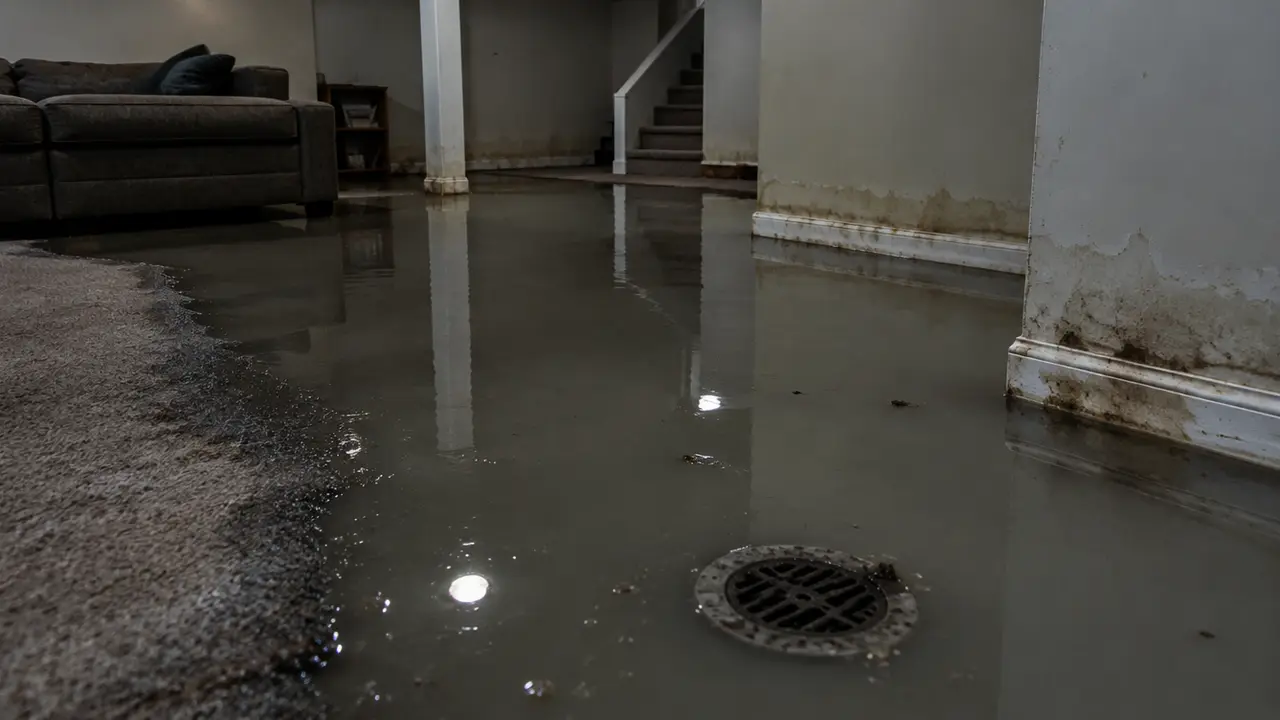
Two things happen in a big storm. First, every house on the street with tile tied to the sanitary sewer is adding groundwater to a pipe that was sized for sewage. Second, stormwater leaks into sanitary systems through manholes and cracked pipes. Together they can fill the sanitary main until it surcharges: the water level in the main rises above the level of basement floor drains, and water flows backwards up the service lines into houses.
A house whose tile is tied into that system is exposed twice. Sewer water can come up the floor drain, and it can also back into the weeping tile itself and rise under the slab and against the walls. That is why a floor drain that bubbles and overflows in storms that flood the street is such a strong clue; the Weeping Tile Problem Finder weighs it heavily.
03 /How can you tell if your weeping tile goes to the sewer?
- No sump pit in a house built before the late 1980s is the first hint that the tile drains somewhere by gravity.
- Clear water at the floor drain during or after heavy rain, when nobody is using water, suggests tile flowing into the house drain.
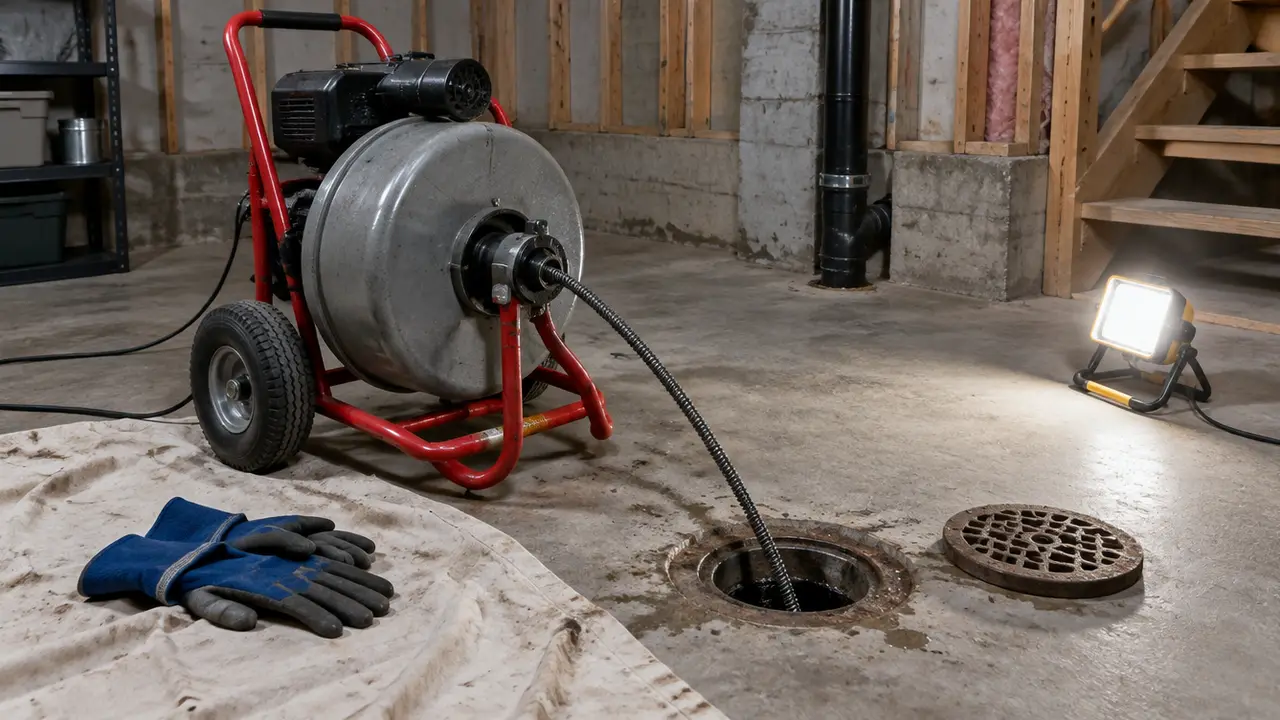
- A camera run from the building drain cleanout can show a tile connection entering the drain, often near where the drain leaves the house.
- A flow test: with the tile flooded at a cleanout or window well drain, watch whether water arrives in the floor drain or main cleanout.
- City records or a plumbing assessment: Toronto’s program even subsidises a one-time home plumbing assessment by a plumber (as checked September 2026).
If you find a connection, do not cut it yourself. Capping the tile without a sump in place leaves the groundwater with nowhere to go, and the work needs permits in most cities.
04 /How is weeping tile disconnected from the sewer?
- Confirm the connection
A camera run or plumbing assessment shows where the tile joins the drain.
- Check the program first
If your city subsidises the work, read its rules and apply in the required order before hiring anyone.
- Get permits
Plumbing or building permits are usually needed for a sump, a backwater valve and changes to the building drain.
- Install the sump
A new pit is cut into the basement floor near where the tile can be intercepted, with a pump, check valve and a discharge through the wall.
- Sever and cap
The tile is cut from the building drain and the drain opening is capped, inside under the floor or outside at the connection. Toronto’s program describes this as severing and capping the underground sewer connection.
- Reroute the tile
The tile is connected to the new pit so all foundation water arrives there.
- Add a backwater valve
With the tile off the drain, a backwater valve on the building drain can close in a surge without trapping tile water.
- Discharge to the surface
The pump sends water outside onto permeable ground away from the foundation, never to the floor drain or sanitary sewer.
How the pit and pump work, and how to choose a backup, are in how weeping tile and sump pumps work and sump pump choice and backup. The valves involved, including the flapper and P-trap some systems use, are covered in weeping tile backwater and flapper valves.
05 /Which cities pay toward disconnection?
Program details change, so treat the table as a starting point and check the city’s own page before any work. Figures were read from each city’s site in September 2026.
| City | What the program covers | Published maximums | Key conditions |
|---|---|---|---|
| Toronto | Foundation drain severance and capping; sump pump with alarm; battery backup; backwater valves; plumbing assessment | Up to 80% of invoiced cost: $400 severance and capping; $2,250 sump pump; $300 battery backup; $1,600 per backwater valve (max two); $500 assessment | Registered owner of a one- to four-unit home; City-licensed contractor; apply within two years of the work; downspouts disconnected |
| London | Weeping tile disconnection with a new sump pit and pump; additional disconnection; backwater valve; battery backup | 90% of cost to: $4,000 sump with disconnection; $2,400 additional disconnection; $1,800 backwater valve; $1,400 battery backup with a new pump | Work must not have started; flooding history or a flood-prone area |
| Ottawa | Residential Protective Plumbing program: sump pumps, footing drain changes, backwater valves | Amounts not confirmed here; the City refunds building permit fees for approved devices | Permit and inspection required; call 311 |
| Edmonton | EPCOR backwater valve subsidy; free flood prevention home inspection | Up to $800 for a backwater valve; weeping tile work not named in the subsidy | Homes built before 1989, previous sewer backup, or areas with past neighbourhood flooding |
| Winnipeg | City guidance on sump pit drainage systems and backwater valves | No current subsidy confirmed on the pages checked | Sump pit drainage systems required in homes built since 1990; ask 311 |
| Calgary | City guidance; sanitary discharge prohibited | No subsidy found on the pages checked | Foundation drainage to surface or storm only; call 311 |
More city-by-city detail, including what each program asks for in writing, is on the Across Canada page.
06 /What should you do before booking the work?
- Read your city’s program page and note whether you must apply before, or within a set time after, the work.
- Ask the contractor to itemise the invoice by device; Toronto, for example, asks for battery backup costs to be itemised separately.
- Confirm who pulls the permits and when the inspection happens, especially for a backwater valve that must be inspected before it is covered.
- Decide where the discharge will go on your lot: onto permeable ground, well away from the foundation and neighbours, never onto a hard surface that ices over.
- Keep photographs, invoices, permits and inspection reports together for the application and for your insurer.
As a planning reference, a sump pit and pump runs about $1,500 to $3,500 and a backwater valve about $1,800 to $4,500 in CAD 2026 terms on this network; the full list is on the cost page. If you would like contractors to quote a disconnection, send HAUSE the details.
FAQQuestions people ask
Is it illegal to have weeping tile connected to the sanitary sewer?
Many cities prohibit new connections; Calgary’s guide says foundation drainage cannot go to the sanitary system, and Edmonton has not allowed it since 1988. Whether an existing connection must be removed depends on the city, so ask.
What does it mean to sever and cap weeping tile?
The tile is cut where it joins the house drain and the drain opening is sealed, so groundwater no longer enters the sewer. The tile is then routed to a sump pit.
Do I need a sump pump if I disconnect my weeping tile?
Usually yes. Once the tile no longer drains to the sewer, a sump pit and pump, or an approved storm connection, has to take the water instead.
Does Toronto pay to disconnect weeping tile?
Toronto’s Basement Flooding Protection Subsidy Program pays up to 80% of invoiced cost, to a maximum of $400, for foundation drain severance and capping, as checked September 2026.
Can I apply for London’s grant after the work is done?
London’s page says applicants must not have commenced any construction of the works in the application, so apply first (as checked September 2026).
NETWORKGo deeper across the HAUSE Sewer network
Backwater valve installation cost and municipal subsidies
Backwater valve installation cost in Canada for 2026: CAD ranges for unfinished and finished basements, line items, subsidy program patterns and insurance angles.
SewerJetting.caHydro jetting weeping tile: how foundation drains are cleaned, and when they cannot be
Hydro jetting weeping tile explained: how foundation drains clog with silt, roots and iron ochre, how they are jetted from the sump, and when to replace them.
SewerCleaners.caBackwater valve installation: whether you need one, where it goes and how it is done
Should you install a backwater valve? When one is required, how it differs from a sump pump, how installation works, where it goes, costs and subsidies.
SOURCESSources and further reading
- City of Toronto — Basement Flooding Protection Subsidy Program (updated June 18, 2026)
- City of London — Basement Flooding Grant Program
- City of Edmonton — The Homeowner’s Guide to Lot Grading and Drainage (April 2020)
- City of Ottawa — Residential Protective Plumbing FAQ
- City of Calgary — Guide to Lot Drainage, Residential Development (2019)