The Problem Finder scores thirteen possible causes of basement water, from a clogged or broken weeping tile to a failed pump, a frozen discharge, a sewer tie-in, surface water or an inside leak. Each answer adds published points to one or more causes. It shows the top three with a confidence band and the next test to confirm each one. It does not price anything.
- Five questions are required: where the water appears, when, what the sump does, when the house was built, and the soil. Ten optional clues sharpen the ranking.
- Every answer adds points from the table on this page; the causes are ranked by total.
- Six points or more is shown as likely, three to five as possible, below three as less likely.
- Each of the top three causes comes with a specific next test, from a pour test of the pump to a camera run or a hose test.
Weeping Tile Problem Finder
01 /What does the Weeping Tile Problem Finder do?
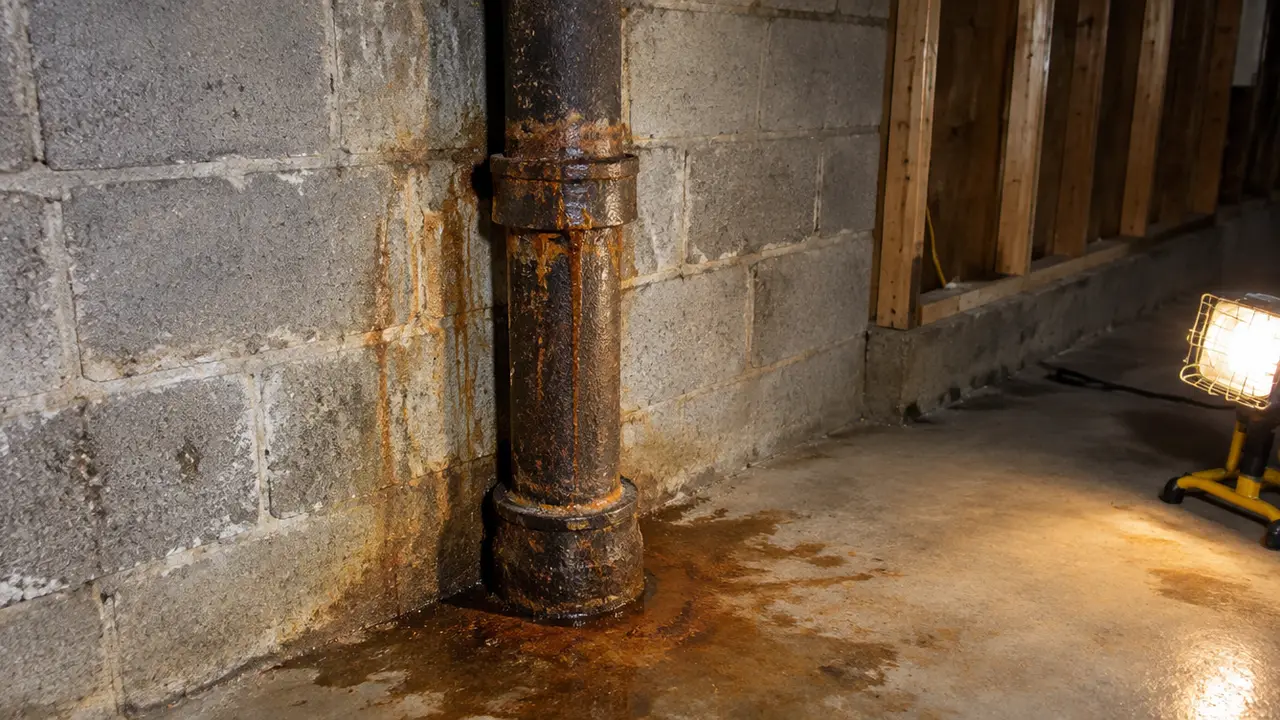
It turns what you have noticed into a ranked short list. A wet basement can come from a dozen places, and the weeping tile is only one of them. Before paying for a flush or a new system, it is worth knowing whether the pattern of the water points at the tile, at the pump that empties it, at the discharge outside, at a connection to the city sewer, or at something that has nothing to do with drainage, such as a downspout or a leaking pipe.
The tool asks the questions a drain contractor asks on the phone: where does the water show up, when, and what does the sump do? It adds the house’s age and the soil because they change the odds, and ten optional clues that point strongly at one cause. The result is the three highest-scoring causes, why each scored, and what to do next to confirm or rule it out.
02 /Which causes does it consider?
| Cause | Next test the tool suggests |
|---|---|
| Surface water: grading, downspouts or a window well | Hose test at the wet spot or downspout outlet for 20 to 30 minutes; check the ground falls away (Calgary asks for at least 4% over the first 1.2 m) |
| Weeping tile clogged with silt | Look for mud in the pit, then a camera run from the pit or a cleanout; flush if the pipe is intact |
| Iron ochre in the tile or pump | Look for orange slime; an iron indicator strip on pit water (MSU rates above 25 mg/L very high, below 1 mg/L negligible); flush early |
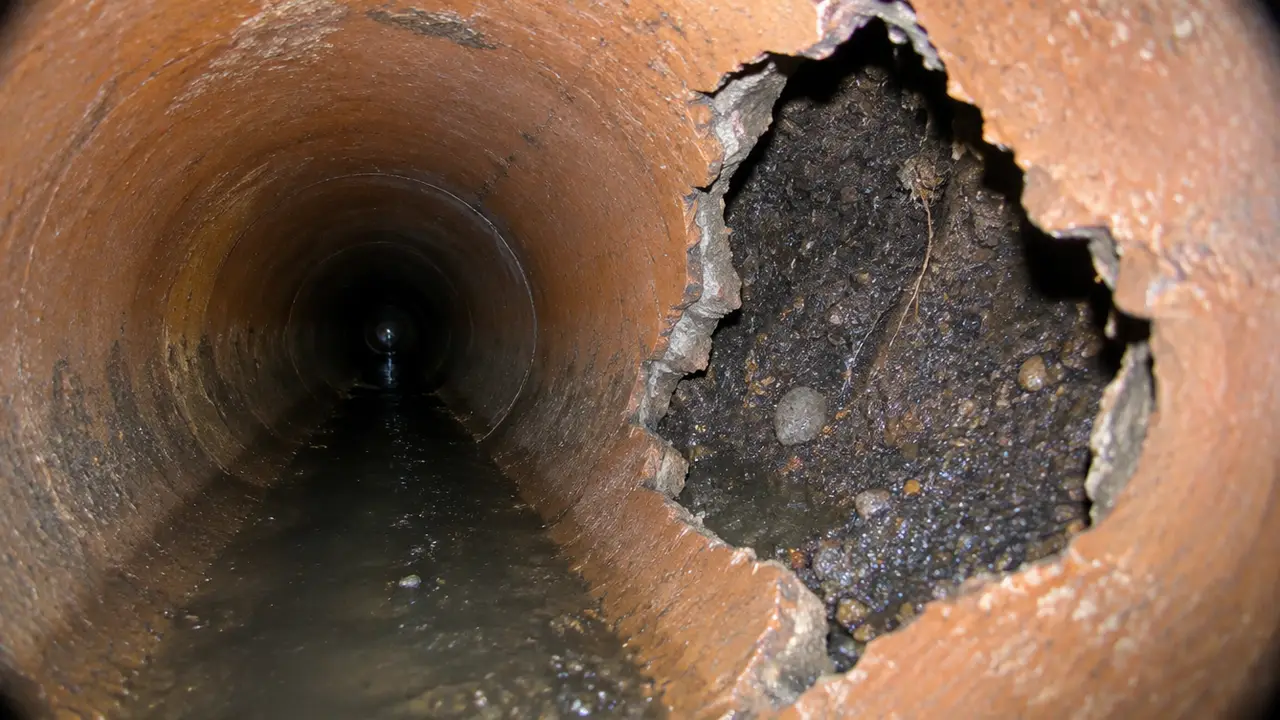
| Roots in the tile | Camera run; note the distance and compare with where trees stand; cut, flush, consider replacing that stretch |
| A crushed, separated or collapsed section | Camera with a sonde to find distance and depth, then a single dig |
| Sump pump, float or power failure | Edmonton’s three steps: power on, pour water in until it starts, see water leave outside |
| Blocked, frozen or recirculating discharge | Follow the line outside for ice, crushing or an outlet next to the house; Toronto asks for at least 2 m from the foundation |
| Tile tied to the sanitary sewer, backing up in storms | Camera the building drain for a tile connection or flood-test the tile; check city disconnection programs |
| No working weeping tile at all | Look for a pit or cleanouts; camera from any access, or a test dig at one corner |
| More groundwater than the system can move | Time the pit filling and emptying in a storm; check the pump’s capacity at your discharge height |
| A leak through the wall itself | Hose-test above the crack or window; wall leaks need foundation repair as well as drainage |
| A blocked building drain or sewer line, not the tile | Stop using water; have the main line cleared and scoped from its cleanout |
| An inside source: a plumbing leak or condensation | Check supply lines and the water heater; tape plastic to the wall for a day to tell condensation from seepage |
03 /How are the points assigned?
Every answer to questions 1 to 5, and every clue you tick in question 6, adds the points shown below. The totals are compared and the three highest are shown in order. Answers of "Not sure" add nothing, so they neither help nor hurt a cause. Where two causes tie, they keep the order of the cause list above.
| Question | Answer | Points added |
|---|---|---|
| Where does the water show up? | At the wall–floor joint, along several walls | Silt +3, No tile +2, Groundwater volume +2, Iron ochre +2, Surface water +1, Broken section +1, Pump failure +1 |
| Where does the water show up? | At the wall–floor joint, one wall or corner | Surface water +3, Broken section +3, Roots +2, Silt +1, Wall leak +1 |
| Where does the water show up? | Through a crack or tie hole in the wall | Wall leak +4, Surface water +2 |
| Where does the water show up? | Below a basement window | Wall leak +3, Surface water +3 |
| Where does the water show up? | Up through the floor, away from the walls | Groundwater volume +3, No tile +2, Silt +1, Pump failure +1 |
| Where does the water show up? | Out of the floor drain | Sanitary tie-in +4, Drain line +2, Broken section +1 |
| Where does the water show up? | Overflowing from the sump pit | Pump failure +4, Discharge +3, Groundwater volume +2 |
| Where does the water show up? | Damp walls or a musty smell, no standing water | Inside source +3, Surface water +1, Wall leak +1 |
| When does it happen? | During or right after heavy rain | Surface water +2, Silt +1, Wall leak +1, Broken section +1 |
| When does it happen? | During spring melt | Surface water +2, Discharge +2, Groundwater volume +2, No tile +1 |
| When does it happen? | In big storms, when streets flood or neighbours get water too | Sanitary tie-in +4, Groundwater volume +2 |
| When does it happen? | During a power outage | Pump failure +5 |
| When does it happen? | Most of the time, wet weather or not | Inside source +3, Groundwater volume +2, Pump failure +1 |
| When does it happen? | When we run water (laundry, showers, dishwasher) | Drain line +5, Inside source +2 |
| What does the sump pump do? | There is no sump pit | No tile +1, Sanitary tie-in +1 |
| What does the sump pump do? | Runs in wet weather and keeps up | Surface water +2, Wall leak +2 |
| What does the sump pump do? | Runs almost constantly, even in dry weeks | Groundwater volume +3, Discharge +3 |
| What does the sump pump do? | Runs but cannot keep up in storms | Groundwater volume +3, Pump failure +2, Discharge +1 |
| What does the sump pump do? | Pit stays dry even when the basement gets wet | Silt +3, Broken section +3, Iron ochre +2, No tile +2, Roots +1 |
| What does the sump pump do? | Pit is full and the pump is not running | Pump failure +5, Discharge +1 |
| What does the sump pump do? | Starts and stops every few seconds | Pump failure +3, Discharge +1 |
| What does the sump pump do? | Not sure | No points |
| When was the house built? | Before 1960 | No tile +2, Sanitary tie-in +2, Roots +2, Broken section +1 |
| When was the house built? | 1960 to 1988 | Sanitary tie-in +2, Roots +1, Silt +1 |
| When was the house built? | 1989 to 2005 | Pump failure +1, Silt +1 |
| When was the house built? | After 2005 | Pump failure +1, Discharge +1 |
| When was the house built? | Not sure | No points |
| What is the soil like? | Clay | Surface water +1, Groundwater volume +1 |
| What is the soil like? | Silt or fine sand | Silt +3, Iron ochre +2 |
| What is the soil like? | Sand or gravel | Iron ochre +1, Silt +1 |
| What is the soil like? | Not sure | No points |
| Clue | Orange or rust-coloured slime in the pit or tile | Iron ochre +6 |
| Clue | Mud or silt in the sump pit | Silt +4, Broken section +2 |
| Clue | Trees or large shrubs within a few metres of the wet wall | Roots +4 |
| Clue | Downspouts empty close to the foundation | Surface water +4 |
| Clue | Ground by the wall is flat or slopes toward the house | Surface water +4 |
| Clue | The sump hose empties close to the house | Discharge +4 |
| Clue | It is winter and the discharge line may be frozen | Discharge +4 |
| Clue | Recent digging, landscaping or heavy equipment near the wall | Broken section +4 |
| Clue | The floor drain gurgles or smells in storms | Sanitary tie-in +4 |
| Clue | A contractor found a blockage or break in the tile | Broken section +2, Silt +2, Roots +1, Iron ochre +1 |
One combination rule sits on top of the table: when you answer "There is no sump pit" and the house was built before 1960 or between 1960 and 1988, the sanitary tie-in cause gets 2 more points, because older houses without a pit often send their tile into the house drain. City guidance explains why; Edmonton’s homeowner guide says tile in pre-1988 development was directed to the sanitary and combined sewers.
04 /Why are the points weighted this way?
The heaviest weights, five and six points, go to observations that almost name the cause on their own: water during a power outage points at the pump; water that appears when you run the laundry points at a drain blockage; orange slime is ochre. Four points go to strong clues that still need confirming, such as a downspout by the wall or a gurgling floor drain in storms. One to three points go to patterns that several causes share, such as water at the wall–floor joint after rain.
The era and soil answers carry small weights because they shift the odds rather than decide them. Before 1960 houses are more likely to have clay tile, sewer connections or no tile at all. Fine sands and silts wash into unfiltered pipe and, in Michigan State University Extension’s ochre bulletin, are among the soils with the highest ochre potential, while clays are among the lowest. These are general patterns; your house may be the exception, which is why each cause comes with a test.
05 /How do I read the result?
- The headline is the highest-scoring cause.
- The three rows show each cause’s total and up to three reasons it scored, taken from your answers.
- The badge is the confidence band: 6 points or more is "Likely", 3 to 5 is "Possible", below 3 is "Less likely".
- Next test for each gives one practical check per cause, with a link to the guide that explains it.
- Also scored lists any other causes that picked up points, with their totals.
- Notes appear in three cases: a sewage warning when a sewer tie-in or a blocked drain line is among the top three causes; an electrical warning when water comes from the pit or up through the floor, or the pit is full with the pump stopped; and a reminder to fix surface water first when surface water scores 3 or more.
When the top two causes are close, do the cheaper test first. A pour test of the pump takes five minutes; a hose test takes half an hour; a camera run is a service call. Surface fixes such as downspout extensions come before drain work because they are cheap and they reduce what any drain has to carry.
06 /What are the limits of the tool?
It knows only what you tell it, and the points are rules of thumb built from how these problems usually present, not measured probabilities. It does not account for more than one cause at once, although a basement can have a clogged tile and a bad downspout together; if two causes both score as likely, treat both as real. It does not look at structural issues: a crack that is widening, a wall that is bowing, or a floor that is heaving are foundation problems for an engineer.
Once you know the cause, the next step depends on what it is. For tile problems read clogged weeping tile or collapsed weeping tile repair; for pumps, sump pump choice and backup; for sewer connections, weeping tile connected to the sanitary sewer. If a new system is the answer, the Interior vs Exterior Weeping Tile tool compares the two routes, and the cost page lists planning ranges. You can also send HAUSE your answers with a request.
FAQQuestions people ask
Does the Problem Finder tell me what the repair costs?
No. It ranks causes and suggests tests. Planning ranges are on the cost page and in the Interior vs Exterior Weeping Tile tool.
Why does my answer about house age matter?
Older houses are more likely to have clay tile, a sewer connection or no tile at all. The era adds a small number of points to those causes.
What if two causes both show as likely?
Treat both as real. Basements often have more than one source of water; start with the cheaper test.
Is my answer stored anywhere?
No. The tool runs in your browser and does not send your answers anywhere unless you choose to include them in a request.
NETWORKGo deeper across the HAUSE Sewer network
Snaking a drain from the roof vent: when it helps and when it does not
Can you snake a drain from the roof vent? When the vent stack is the right access, clearing a blocked or frost-closed vent, and the roof safety that comes first.
SewerCleaners.caBackwater valve installation: whether you need one, where it goes and how it is done
Should you install a backwater valve? When one is required, how it differs from a sump pump, how installation works, where it goes, costs and subsidies.
SewerJetting.caHot water jetting and frozen sewer lines in a Canadian winter
Frozen sewer line in winter? How hot water jetting and steam thawing work, why sewer lines freeze, what not to do, and how to prevent a repeat.
SOURCESSources and further reading
- City of Edmonton — The Homeowner’s Guide to Lot Grading and Drainage (April 2020)
- City of Calgary — Guide to Lot Drainage, Residential Development (2019)
- Michigan State University Extension — Iron Ochre, Bulletin E3453 (revised August 2023)
- City of Toronto — Basement Flooding Protection Subsidy Program