A weeping tile system is only as reliable as the pump that empties it. Edmonton’s homeowner guide recommends at least a 1/3 hp pump that passes 10 mm stones, sized for about 10 to 12 ft of head, with a check valve and a backup or alarm. Submersible pumps are most common. Calgary suggests backup power, a separate circuit, testing by pouring water in, and replacing the pump about every 10 years.
- Size the pump for the height and distance it must push water, not just horsepower.
- A backup pump, on battery or water power, or at least a high-water alarm, covers the storm that knocks out the power.
- A check valve stops the discharge column falling back and restarting the pump.
- Test by pouring water into the pit; look outside to confirm water actually leaves.
- Plan to replace the pump around its tenth year rather than waiting for it to fail.
01 /What kind of sump pump does weeping tile need?
Edmonton’s homeowner guide names three common types. Submersible pumps sit in the water at the bottom of the pit, sealed, and are the most common in houses. Pedestal pumps keep the motor on a column above the pit with only the impeller below, and the guide notes they may be better in highly corrosive conditions. Water-powered pumps use household water pressure to drive an ejector and are used mainly as backups; the same guide says they are not as efficient as electric pumps.
02 /How do you size a sump pump?
By how much water it has to move and how high it has to lift it. The Edmonton guide’s checklist is a sensible starting point: at least 1/3 horsepower, a pumping head of about 10 to 12 ft from the water in the pit to where the pipe leaves the house, the ability to pass stones up to 10 mm so grit does not jam it, a 1-1/4 inch discharge line, a check valve, a backup or alarm, and a CSA certification mark. It suggests warranties are generally one to two years.
Horsepower alone does not tell you capacity. Pump makers publish a curve showing litres or gallons per minute at each height of lift; read the flow at your actual head, including the rise out of the pit, the run to the wall and any bends. A pump that moves plenty at 3 m of head may move far less at 4 m. If you already have a pump that runs flat out and still loses ground in storms, that curve is where to look first.
| Feature | Suggested minimum | Why |
|---|---|---|
| Horsepower | 1/3 hp | Enough power for a typical house lift |
| Capacity | Specific to each home | Read the maker’s curve at your head |
| Head | About 10 to 12 ft | Lift from the pit to where the pipe leaves the house |
| Solids handling | Passes stones up to 10 mm | Grit and small stones from the tile will not jam it |
| Discharge line | 1-1/4 inch pipe | Matches common residential pumps |
| Check valve | Recommended | Stops water falling back into the pit |
| Backup or alarm | Recommended | Covers pump failure and power cuts |
| Certification | CSA mark | Tested to a recognised standard |
03 /Do you need a backup sump pump?
If your basement depends on the pump, a backup is cheap insurance. The storms that fill a weeping tile system fastest are also the ones most likely to knock out power, and a primary pump can simply wear out. The City of Calgary’s lot drainage guide says to always provide supplementary back-up power and a separate electrical circuit, with the operating switch above the designated flood level where one applies.
- Battery backup pump: a second pump, set a little higher in the pit, runs from a battery with a charger. The City of Ottawa describes battery backup as an uninterruptible supply connected directly to the pump.
- Secondary electric pump: Ottawa notes a secondary pump can share the primary’s pit or sit in a separate pit, given the right sizing and space. It covers a failed primary but not a power cut unless it has its own power.
- Water-powered backup: runs on household water pressure, so it needs no electricity; it moves less water and draws on the water supply. Ask about backflow protection and permits before installing one.
- Generator: keeps the primary running during an outage if it is set up and started in time.
- High-water alarm: the minimum. It does not pump, but it tells you the level is rising before it reaches the floor.
Several cities help pay. Toronto’s Basement Flooding Protection Subsidy Program covers a sump pump with alarm at up to 80% of invoiced cost to a maximum of $2,250, and adds up to $300 for a battery backup when it is itemised on the invoice; London offers up to $1,400 toward a battery backup installed with a new sump pump (both as checked September 2026). Details are on the Across Canada page.
04 /Why does a sump pump need a check valve?
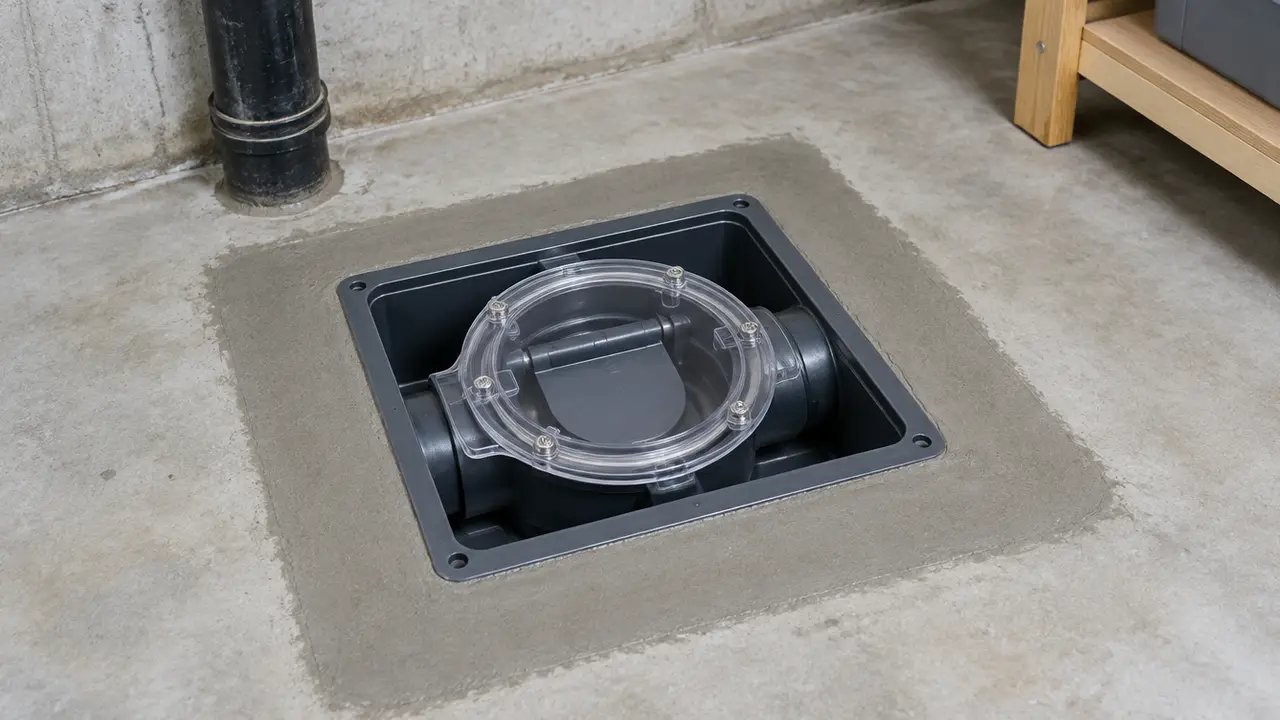
Because the discharge pipe holds a column of water every time the pump stops. Without a one-way check valve, that water falls back into the pit, raises the level, and in a small pit can restart the pump straight away. That short cycling wears the motor and switch. The check valve goes in the vertical pipe above the pump, usually just above the pit lid where it can be reached.
Check valves fail too. Signs include water running back into the pit after the pump stops, a loud clunk each cycle, or a pump that starts again within seconds. Replacing one is a small job, and it is worth doing before storm season rather than during it.
05 /How do you test and maintain a sump pump?
- Check the power
Make sure the pump’s circuit is on and the plug is secure, preferably on a dedicated circuit.
- Pour water in
Fill the pit from a bucket or hose until the float lifts and the pump starts, as both Calgary and Edmonton describe.
- Look outside
Confirm water is leaving the discharge line; a pump can run without moving water if its intake or check valve is blocked.
- Clean the pit
EPCOR advises keeping the pit clear of debris. Unplug the pump before reaching in.
- Check the float
Make sure nothing restricts the float’s movement, including the pump’s own cord.
- Look for oil
Edmonton’s guide says oil in the sump well can indicate a failed pump seal.
- Test the backup
Switch off the primary and confirm the backup starts and the alarm sounds.
- Check the outlet in winter
Disconnect or clear outside hoses before freeze-up so the pump is not pushing against ice.
How often? Edmonton notes that some manufacturers recommend running the pump every two to three months and others once a year, and says to follow your manufacturer. Where iron ochre is present, the pump and discharge need more frequent attention; Michigan State University Extension suggests setting the float higher so the pump stays submerged and starved of oxygen, as described in clogged weeping tile.
06 /When should a sump pump be replaced?
Before it fails, ideally. Calgary’s climate-ready guidance says to replace a pump every 10 years or sooner, and Edmonton’s guide expects a good-quality pump to last around 10 years depending on how often it runs and how acidic and dirty the water is. A pump that is noisy, slow to empty the pit, cycling rapidly or tripping its breaker is telling you something earlier.
Replacement is a good moment to fix the rest of the pit: a check valve that leaks back, a lid that is not sealed, a discharge that empties too close to the house, or a pit too small for the inflow. As a CAD 2026 planning range on this network, a new sump pit and pump installed runs about $1,500 to $3,500; swapping the pump alone in an existing pit is usually a fraction of that and is quoted on site.
If the pump is fine but water still appears, the tile or the outlet may be the problem; the Weeping Tile Problem Finder sorts the possibilities. The whole system is explained in how weeping tile and sump pumps work, and planning ranges are on the cost page.
FAQQuestions people ask
What horsepower sump pump do I need for weeping tile?
Edmonton’s guide recommends a minimum of 1/3 hp, but capacity at your lift height matters more. Check the maker’s curve at your head.
Is a battery backup sump pump worth it?
Where the basement depends on the pump, yes. Storms that flood tile often cut power. Toronto and London both subsidise battery backups, as checked September 2026.
How long does a sump pump last?
Around 10 years for a good pump, depending on use and water quality. Calgary suggests replacing it every 10 years or sooner.
Should a sump pump have its own circuit?
Calgary’s lot drainage guide says to provide a separate electrical circuit, with the switch above the designated flood level where applicable.
Can two sump pumps share one pit?
Yes. Ottawa notes a secondary pump can sit in the same pit as the primary, given the right sizing and space, or in a separate pit.
NETWORKGo deeper across the HAUSE Sewer network
Seasonal sewer risks: spring thaw, heavy rain and winter freeze
Seasonal sewer risks in Canada: spring thaw and snowmelt, summer storms and surcharges, fall roots and leaves, and winter freeze, with a checklist for each season.
SewerJetting.caPressure vs flow: why gallons per minute does most of the cleaning
Jetter psi vs gpm explained: pressure breaks debris loose, flow carries it away and pulls the nozzle. Typical residential numbers and hose loss.
PipeCleaning.caHow to clean outside drain pipes: downspouts, yard drains and weeping tile
How to clean outside drain pipes in Canada: downspout leaders, yard drains, weeping tile, sump lines and the sewer cleanout, plus thawing frozen lines.
SOURCESSources and further reading
- City of Edmonton — The Homeowner’s Guide to Lot Grading and Drainage (April 2020)
- City of Calgary — Climate ready measures: drainage and water management
- City of Calgary — Guide to Lot Drainage, Residential Development (2019)
- City of Ottawa — Residential Protective Plumbing FAQ
- City of Toronto — Basement Flooding Protection Subsidy Program