Three different valves get called the weeping tile valve. A flapper, often with a P-trap, sits where tile joins a sewer drain and stops sewage flowing back into the tile. A backwater valve on the building drain or storm lateral closes when the city sewer surcharges. A check valve on the sump discharge stops pumped water falling back into the pit. Each needs cleaning or testing.
- EPCOR describes a backflow flapper and a U-shaped P-trap on weeping tile systems to keep wastewater out of the tile during a sanitary backup.
- Calgary notes that where weeping tile drains to the storm sewer, a backup prevention device may lessen water entering the basement when the storm system is overloaded.
- Ottawa made backwater valves mandatory in new homes after 2004 on storm and 2012 on sanitary laterals.
- Old cast iron flappers can corrode and stick; Edmonton’s guide suggests replacing them with a plastic-flap valve.
- While a backwater valve is closed, stop using water in the house.
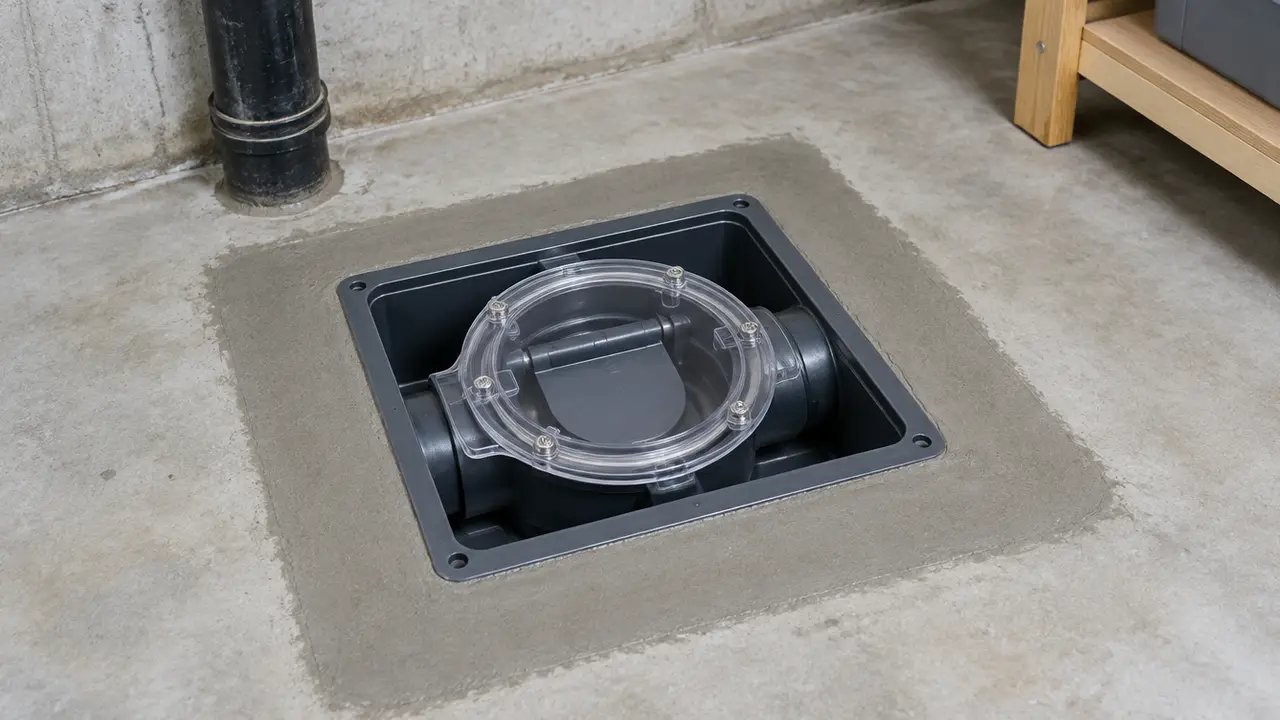
01 /What is the valve on my weeping tile?
Start by finding where your tile goes. If it drains into a sump pit, the only valve in the path is normally the check valve on the pump’s discharge pipe. If it drains by gravity into a house drain or a storm service, there may be a flapper, a trap, or a backwater valve where the tile meets that pipe. The names overlap in everyday use, so it helps to sort them by job.
| Device | Where it sits | What it stops | Upkeep |
|---|---|---|---|
| Backflow flapper on the tile | Where tile joins a sanitary or storm drain by gravity | Sewer water flowing back into the tile loop | Clean periodically; check the flap moves freely |
| P-trap on the tile connection | A U-bend in the tile connection to a drain | Sewer gas coming up through the tile; works with a flapper in some systems | Needs a water seal; clear if silted |
| Backwater valve, sanitary | On the building drain, usually under the basement floor | City sewer surcharge coming up floor drains and fixtures | Inspect and clean; test before storm season |
| Backwater valve, storm or foundation drain | On a storm lateral or the tile outlet line | Storm sewer surcharge pushing into the tile | Inspect and clean; keep access cover clear |
| Check valve on the sump discharge | In the pipe above the sump pump | Pumped water falling back into the pit | Replace if it chatters, leaks back or sticks |
02 /What does a weeping tile flapper and P-trap do?
EPCOR’s weeping tile page for Edmonton says homes with weeping tile have a backflow flapper and a U-shaped P-trap designed to prevent wastewater flowing into the weeping tile system should a sanitary backup occur, and it lists cleaning weeping tile valves periodically as routine maintenance. The logic is straightforward. Where tile drains into a sewer pipe, the connection is a door both ways. The flapper swings open for tile water flowing out and closes when the sewer side pushes back. The trap holds a plug of water that keeps sewer air from travelling up the tile and into the soil around the basement.
Both can fail quietly. A flapper jammed open with silt or ochre lets the sewer into the tile; one jammed shut stops the tile draining at all. A trap on a line that rarely carries water can lose its seal in a long dry spell. If your house has this arrangement, find the access point, often a covered opening in the basement floor near the main drain, and add it to the list of things checked before spring melt.
03 /How is a backwater valve different?
A backwater valve protects the house, not just the tile. It sits on the building drain (or on a storm lateral) and contains a gate or flap that lies open while water flows out, then closes when water starts coming back from the street. The City of Ottawa’s protective plumbing FAQ describes the gate as parallel to the lateral in normal conditions and closing, or becoming perpendicular, when sewer surcharging occurs.
Edmonton’s homeowner guide adds two practical points. The sanitary service line entering a home needs a vented backwater valve, while branch lines need a non-vented type, and some homes need more than one. And older valves with cast iron flappers can corrode and stick, in which case the guide says they should be replaced with a valve that has a plastic flap.
04 /Why does a backwater valve need the weeping tile disconnected?
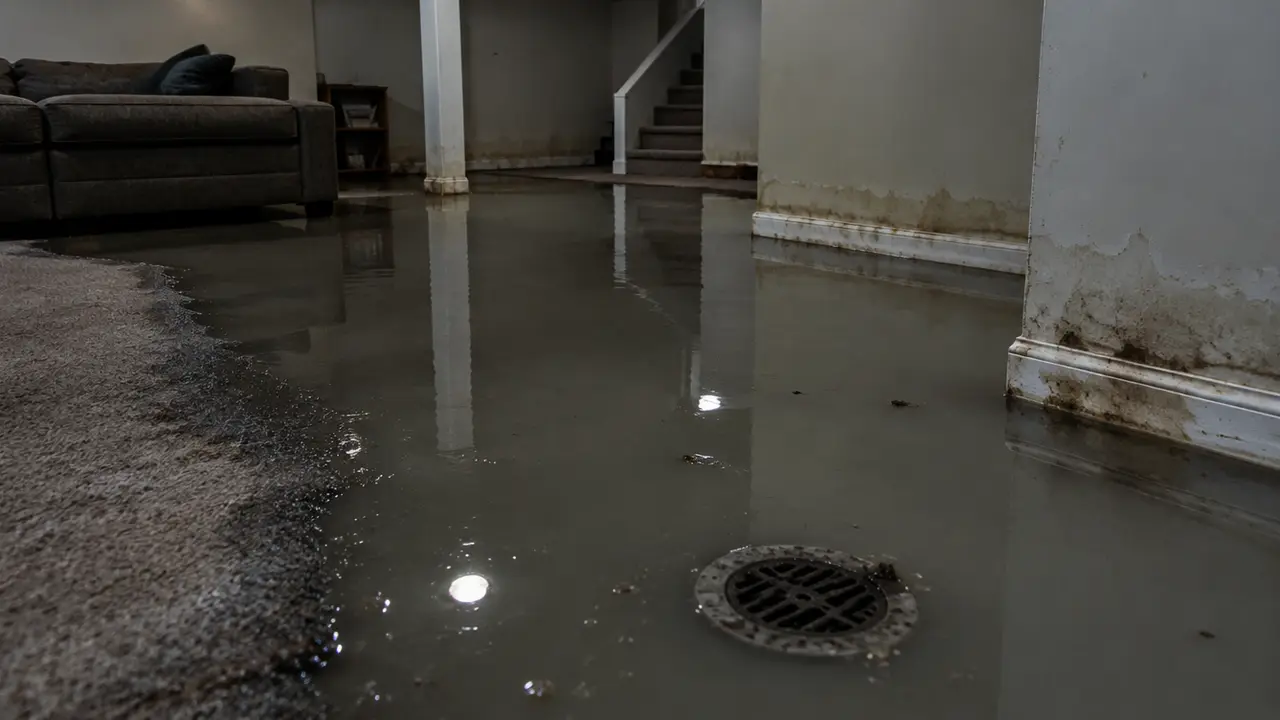
Because the tile keeps delivering water while the valve is shut. If the foundation drain is tied into the building drain upstream of a closed backwater valve, groundwater from around the whole basement flows into a pipe with its exit blocked. It has to go somewhere, and the lowest opening is usually the floor drain. That is the reason disconnection programs pair the two: the tile goes to a sump that pumps outside, and the valve protects the drain.
The steps and the city programs that help pay are in weeping tile connected to the sanitary sewer.
05 /What about weeping tile drained to the storm sewer?
Storm sewers surcharge too. In a heavy downpour the storm main can fill above the level of a house’s tile outlet, and water can then run backwards into the foundation drain. The City of Calgary’s climate-ready guidance says that for weeping tile connected to the storm system, a weeping tile backup prevention device may lessen the flow of water entering basements when the storm system is overloaded.
Ottawa’s protective plumbing material shows how seriously some cities treat this: its FAQ says backwater valves became mandatory in new homes after 2004 for stormwater and after 2012 for sanitary, and the City’s standard drawings include a foundation drain backwater valve installation and an exterior foundation drain backwater valve for retrofit applications on an exception basis. If your tile drains by gravity to a storm service, ask your city what device it expects and whether it needs a permit.
06 /Where is the backwater valve or flapper in my house?
Ottawa’s FAQ gives the most useful tip: look between the last branch of the house sewer and the point where the pipe leaves through the foundation. Inside, it may look like a wye fitting with its branch plugged and pointing up, or a rectangular access cover set into the basement floor. If it is outside in the yard, it is most likely buried and could be several feet deep, usually with a riser and cap at grade.
- Look for a removable cover in the basement floor near the main stack or floor drain.
- Check the house plans or the permit record for the valve location.
- Ask the plumber who does your next drain service to point it out and photograph it.
- A camera run from the main cleanout will show a valve in the line.
07 /How are these valves maintained?
Ottawa’s guidance is typical: the owner maintains the devices according to the manufacturer, periodically or before a forecast heavy rainfall, keeping them free of debris, working properly, and with cleanout caps and access covers firmly secured. Edmonton’s guide likewise says backwater valves need cleaning and maintenance to work. Where a device is hard to reach or you are unsure of its condition, a licensed plumber can inspect it.
- Find every valve
List the backwater valve, any tile flapper and the sump check valve, with where each one is.
- Inspect before storm season
Open the access, look for debris on the flap or gate, and confirm it moves freely.
- Clean gently
Flush debris with a hose and a brush; do not force a stuck flap with a tool that could crack it.
- Check the sump check valve
Listen for water running back into the pit after the pump stops, and replace a valve that leaks back.
- Secure the covers
Loose caps let surge water out around the valve instead of through it.
A valve cannot fix a tile system that is silted or broken; for that, see clogged weeping tile. And a check valve problem on the pump side is covered in sump pump choice and backup. Backwater valve installation, as a CAD 2026 planning range on this network, is about $1,800 to $4,500; the cost page has the details.
FAQQuestions people ask
What is a weeping tile flapper valve?
A one-way flap where weeping tile joins a sewer drain. It lets tile water out and closes when the sewer pushes back, keeping wastewater out of the tile.
Why is there a P-trap on my weeping tile?
A trap holds a water seal that keeps sewer gas from travelling up the tile when the tile drains into a sewer pipe. EPCOR describes a P-trap alongside a backflow flapper on Edmonton systems.
Is a sump check valve the same as a backwater valve?
No. A check valve stops pumped water falling back into the sump pit. A backwater valve stops city sewer water flowing back into the house.
How often should a weeping tile valve be cleaned?
Follow the manufacturer. Ottawa suggests maintaining protective plumbing periodically or before a forecast heavy rain; many owners check before spring melt and summer storms.
Does storm-connected weeping tile need a backwater device?
Calgary says a weeping tile backup prevention device may lessen water entering basements when the storm system overloads. Ask your city what it expects.
NETWORKGo deeper across the HAUSE Sewer network
Can a drain snake damage your pipes? Where the real risks are
Can a drain snake damage pipes? How cables and cutters harm old clay, Orangeburg, cast iron, plastic traps, chrome fittings and toilets, and how to avoid it.
SewerCleaners.caSeasonal sewer risks: spring thaw, heavy rain and winter freeze
Seasonal sewer risks in Canada: spring thaw and snowmelt, summer storms and surcharges, fall roots and leaves, and winter freeze, with a checklist for each season.
PipeCleaning.caHow to clean outside drain pipes: downspouts, yard drains and weeping tile
How to clean outside drain pipes in Canada: downspout leaders, yard drains, weeping tile, sump lines and the sewer cleanout, plus thawing frozen lines.