A filter sock is a knitted fabric sleeve over perforated pipe that keeps fine soil out of the tile. It helps most in silty and sandy soils that wash into pipes, and matters less in sticky clay. The stone around the pipe matters as much: Part 9 calls for at least 150 mm of clean crushed stone. In very fine silt or iron-rich groundwater a sock can clog itself, so the soil decides the filter.
- A sock stops silt entering the pipe; fabric wrapped around the whole stone bed stops silt entering the stone as well.
- Soils that do not stick together, such as sand, loamy sand, silt loam and silt, are the ones most likely to wash into a drain.
- Part 9 calls for at least 150 mm of crushed stone over the top and sides, with no more than 10% passing a 4 mm sieve.
- Iron ochre slime seals filter fabric; in ochre-prone ground the filter choice and a flushing plan go together.
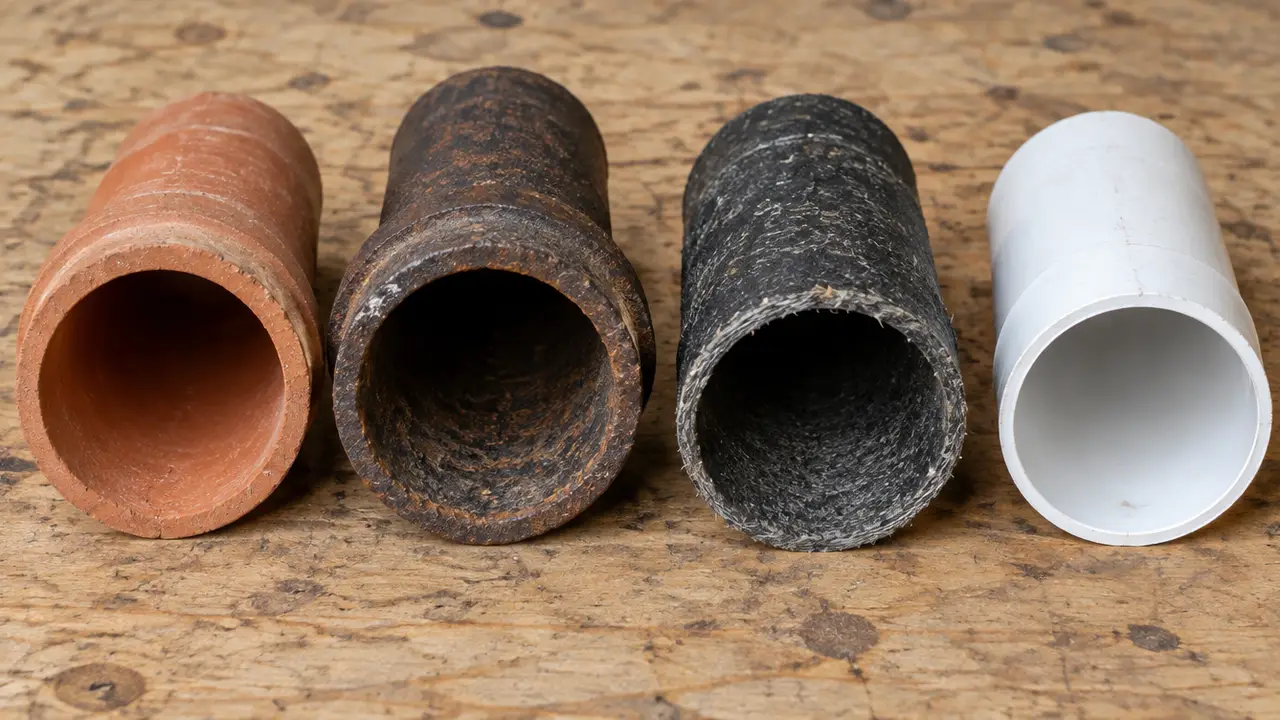
01 /What is a weeping tile sock?
A sock is a tube of knitted synthetic fabric, usually polyester, pulled over perforated drain pipe at the factory. It looks like a long grey or black stocking around the tubing. The knit is open enough to let water through easily and tight enough to hold back most sand and silt particles. Pipe sold as "weeping tile with sock" or "drain pipe with filter" is the same corrugated polyethylene tubing as the bare version, just wrapped.
Filter fabric, or geotextile, is a different product used for the same job. It comes in wide rolls and is laid in the trench so it wraps the whole bed of clean stone around the pipe, like a tortilla around a filling. A sock filters at the pipe wall. Fabric filters at the edge of the stone, so the stone itself stays clean and keeps its open spaces for water to move through.
02 /Does weeping tile need a sock?
It depends on the soil beside your foundation. In fine sands and silts, soil particles do not stick to each other, so moving groundwater carries them toward any opening and into the pipe. Michigan State University Extension lists sand, loamy sand, sandy loam, loam, silt loam and silt as soils that can cause drain sedimentation because they are non-cohesive or weakly cohesive. In those soils an unfiltered pipe can silt up within a few years.
Sticky clays are different. Their particles cling together, they give up less loose sediment, and they drain slowly anyway. A sock in heavy clay is not harmful in itself, but it is not where the trouble usually starts; the bigger risk in clay is a stone bed that gets smeared with clay during backfill, or no stone at all.
| Soil beside the wall | Silt risk to the pipe | Usual filter approach |
|---|---|---|
| Heavy clay | Low | Clean stone matters most; fabric over the stone keeps backfill clay out |
| Silty clay, clay loam | Low to moderate | Fabric around the stone, or a socked pipe in clean stone |
| Loam, silt loam, silt | High | Fabric around the stone and a socked pipe; plan for flushing access |
| Fine sand, loamy sand | High | Socked pipe in clean stone, fabric-wrapped; watch for iron ochre |
| Coarse sand and gravel | Low | Clean stone alone often works; a sock adds little |
03 /What stone should go around weeping tile?
Clean crushed stone, and enough of it. The Part 9 wording reproduced in the 2018 British Columbia Building Code says the top and sides of the drain pipe or tile shall be covered with at least 150 mm of crushed stone or other coarse clean granular material containing no more than 10% of material that passes a 4 mm sieve. That last figure is the important one: "clean" means the fines have been screened out, so the spaces between the stones stay open.
Pit-run gravel, road crush with fines, or the excavated soil itself do not meet that description. They pack around the pipe and slow water down, which defeats the drain. When a camera finds a pipe that is intact but barely taking water, the stone is often the reason: it was never clean, or silt has filled it over the years.
The same section of the code offers a granular drainage layer as an alternative to tile in some cases: a continuous layer of clean stone at least 125 mm deep under the footing, extending at least 300 mm beyond its outer edge, graded to drain to a sump. It is the same idea spread out as a blanket instead of gathered into a pipe. How the pipe, stone and footing fit together is drawn in weeping tile depth, slope and layout.
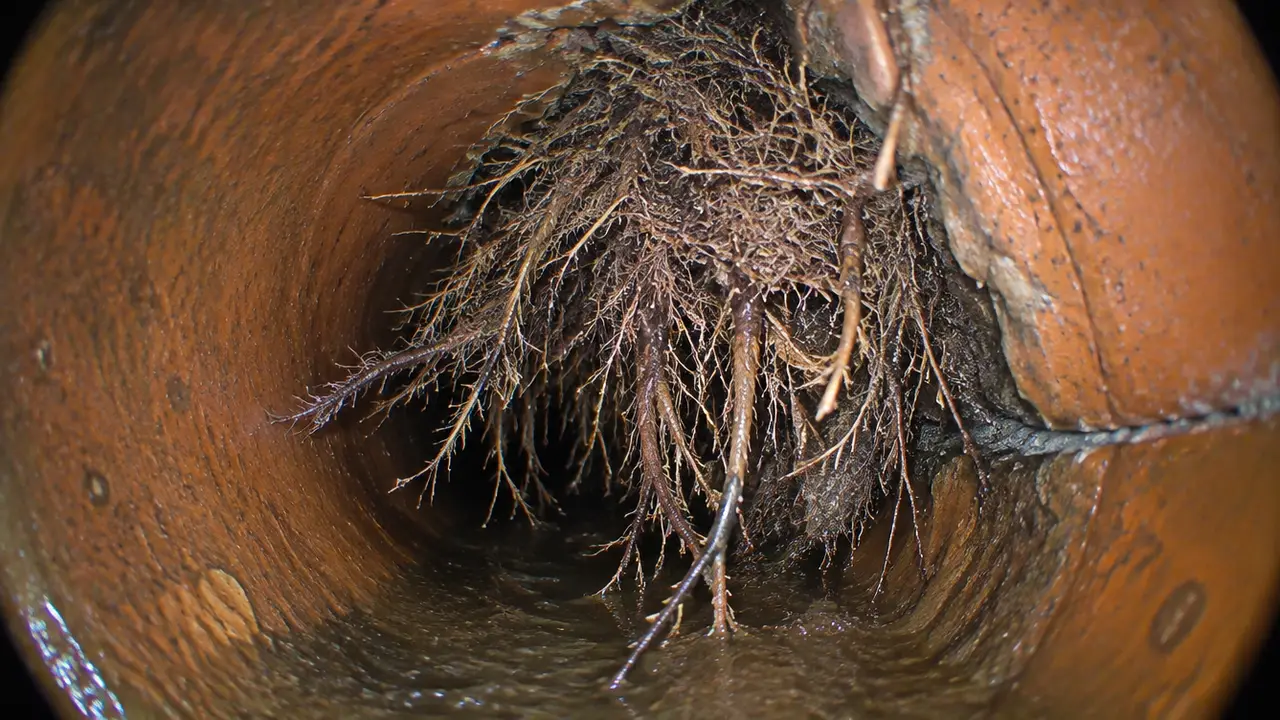
04 /Can a sock make weeping tile clog?
Yes, in two situations. The first is very fine silt or rock flour, which can build a thin, tight layer on the outside of the fabric until water struggles to pass. The second is iron ochre, the orange slime produced when iron-oxidising bacteria meet dissolved iron in groundwater. A 1988 bulletin from the British Columbia Ministry of Agriculture and Food describes ochre as clogging pipe perforations, sealing filter material and filling the inside of drains.
Research summarised by MSU Extension is more nuanced than "never use a sock in ochre". It notes that synthetic thin envelopes performed better than narrow sand-slot pipe under ochre conditions, and that among synthetic envelopes a knitted sock performed best. In ochre-prone ground, the answer is less about skipping the filter and more about a pipe with larger openings, a way in for flushing, and a maintenance plan. The clogged weeping tile guide covers ochre in detail.
05 /Can a clogged sock be cleaned?
Only partly. A jetter nozzle cleans the inside of the pipe well and can loosen deposits in the slots, but it cannot scrub the outside of the sock or the stone bed beyond it. If the fabric itself has blinded over, water may still struggle to get in after a thorough jetting. A camera run after flushing, compared with how fast the pit fills in the next storm, tells you whether the clean made a difference.
Farm drainage guidance also warns against using too much pressure in sandy soils: the BC bulletin kept nozzle pressure at or below 2,750 kPa (about 400 psi) so the jet does not blow apart the envelope around the pipe and pull sand in. Ask any contractor proposing to flush your tile what pressure and nozzle they will use. More on the process is in weeping tile camera inspection and flushing.
06 /Sock or fabric wrap: which should a new system use?
Many contractors now use both in fine soils: a socked pipe in a bed of clean stone, with the stone wrapped in fabric. The sock protects the pipe if a little silt gets into the stone, and the fabric keeps the backfill from contaminating the stone in the first place. In coarse, free-draining ground, clean stone with a fabric wrap may be enough.
- Ask what the soil is beside your foundation, based on what came out of the trench, not a guess.
- Ask which filter the contractor will use and why that one for this soil.
- Ask where the stone comes from and whether it is washed or screened clean.
- Ask for at least one cleanout riser on the loop so a future flush does not start with a dig.
- Ask whether iron ochre has been seen on nearby houses, and if so, what the flushing plan is.
Spot repairs deserve the same care. When one crushed or silted stretch is dug up and replaced, the new piece should get fresh washed stone and a filter that suits the soil, not a shovel of whatever came out of the hole. A repair bedded in dirty material becomes the next blockage, and it sits right where the camera already found trouble once. Ask to see the stone and the fabric before the hole is closed.
Whether the new system goes outside or inside the footing is a separate choice; the Interior vs Exterior Weeping Tile tool compares the two for your house.
FAQQuestions people ask
What does the sock on weeping tile do?
It keeps fine soil particles out of the pipe while letting water through. It matters most in silt and fine sand.
Is a filter sock needed in clay soil?
It is optional in heavy clay. Clean stone and a fabric wrap that keeps backfill clay out of the stone usually matter more.
What kind of rock goes around weeping tile?
Clean crushed stone. The Part 9 wording calls for at least 150 mm over the top and sides with no more than 10% of the material passing a 4 mm sieve.
Can iron ochre clog a weeping tile sock?
Yes. Ochre slime seals filter material and perforations. In ochre-prone ground plan for access and regular flushing rather than relying on the filter alone.
Should weeping tile be wrapped in landscape fabric?
A drainage geotextile wrapped around the stone bed is common. Ordinary woven landscape fabric may not pass water well; ask for a product rated for drainage.
NETWORKGo deeper across the HAUSE Sewer network
Hydro jetting weeping tile: how foundation drains are cleaned, and when they cannot be
Hydro jetting weeping tile explained: how foundation drains clog with silt, roots and iron ochre, how they are jetted from the sump, and when to replace them.
PipeCleaning.caCleaning vitrified clay sewer pipe without breaking it
How to clean vitrified clay sewer pipe safely: root cutting at joints, jetting pressure and nozzles, offsets and cracks, and when clay needs repair.
SewerRoots.caHow to stop roots growing in a sewer line: every prevention method, ranked
How to stop roots growing in a sewer line: prevention methods ranked by whether they close the joint, from lining and point repair to barriers.